
Last Updated on February 25, 2026 by dhruwuttam58@gmail.com
Introduction
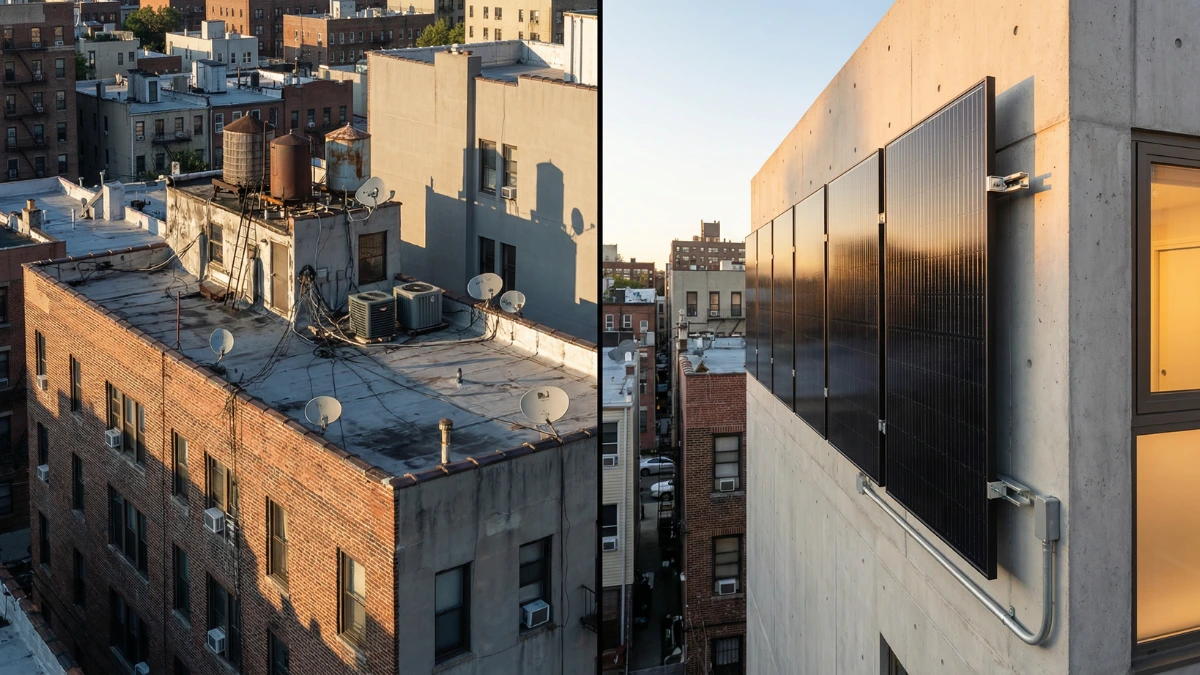
Rooftop solar gets all the glory, but for a lot of city dwellers, it is simply off the table. Maybe you live in an apartment, your roof is shaded or structurally questionable, the terrace is packed with tanks and HVAC units, or your housing society has locked down access to the roof.
That is where wall mounted solar panels step in. These systems mount standard solar modules on exterior walls, balcony fronts, courtyard facades, or boundary walls rather than on the roof. In real-world setups, they typically produce around 10–30% less energy per year than an optimally oriented roof system of the same size, mostly due to orientation and shading.
For people exploring solar panels for apartments or compact solar panels for urban homes, that trade-off can still be worth it. You are turning an unused vertical surface into a working energy asset that can power lights, routers, laptops, and fridges, and even feed a home backup setup or a solar generator.
In this 2026 guide, we will walk through how wall mounted solar panels work, their real benefits and limitations, costs, wind and structural safety, legality, and whether they are genuinely worth it for your situation.
Table of Contents
What Are Wall Mounted Solar Panels?
Wall mounted solar panels are standard photovoltaic modules installed vertically or at a slight tilt on exterior walls, rather than on roofs or ground racks.
Typical setups use:
- Reinforced wall-rated brackets and rails
- Anchors fixed into structural elements (concrete, solid brick, or steel)
- DC cabling routed to an inverter, solar generator, or battery system
- Either grid-tied, hybrid, or off-grid configurations
Unlike roof systems covered in our detailed solar panel roof mounts guide, wall mounted solar panels lean into vertical exposure and the existing building geometry.
Common real-world placements:
- Balcony fronts and side walls in apartments
- South- or west-facing facades in compact urban homes
- Backyard boundary walls or courtyard walls
- Small office or shop front elevations where solar doubles as a “green” statement
How Wall Mounted Solar Panels Work
Electrically, wall mounted solar panels work exactly like any other PV system: sunlight hits the cells, they generate DC power, and an inverter converts it to AC for your home or office. The real difference lies in the geometry and in how the sun moves across the sky.
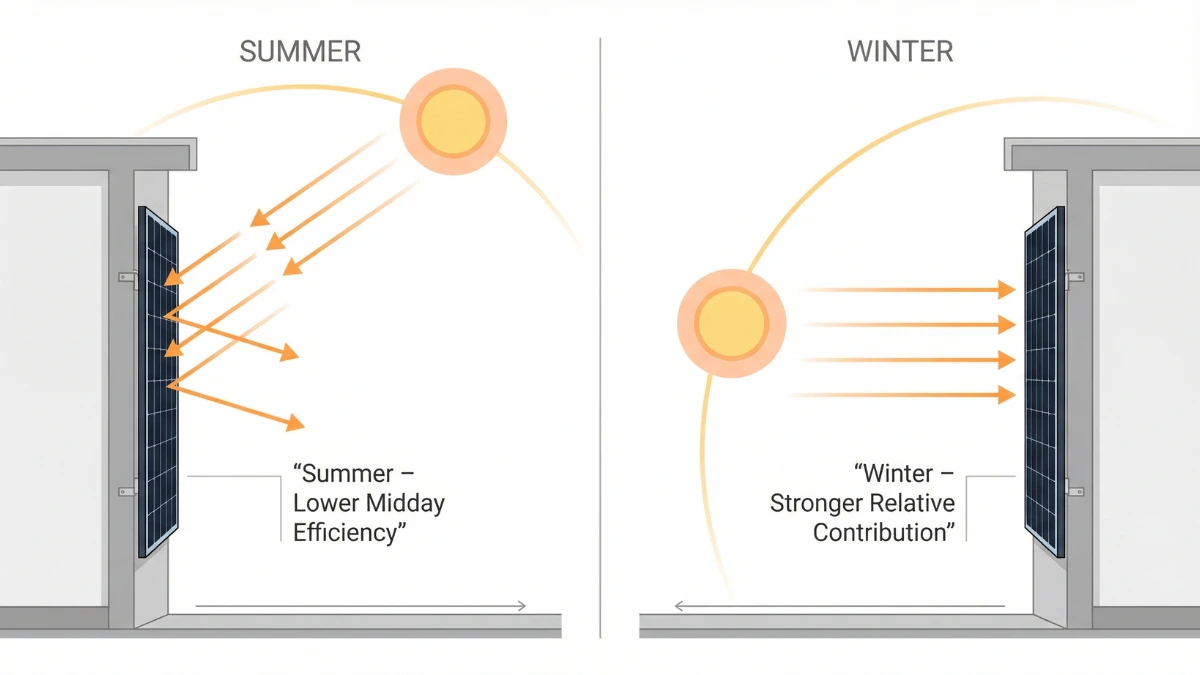
Seasonal Orientation Physics (Simplified)
Because these panels are usually vertical or near-vertical, three key things change:
- Summer performance: When the sun is high, a vertical wall sees less direct midday sunlight than a tilted roof. Expect lower peak production on clear summer days compared with a well-angled rooftop array.
- Winter performance: In winter and shoulder seasons, the sun sits lower in the sky, so its rays hit vertical walls more directly. That means wall mounted solar panels can contribute a larger share of their annual output in cooler months, when heating, lighting, and indoor loads are higher.
- Daily timing:
- South-facing walls: more balanced daytime production
- West-facing walls: stronger afternoon and early evening output
- East-facing walls: stronger morning output, weaker evenings
Because the panels are upright:
- Dust and debris slide off more easily than on shallow roof angles, so light loss from soiling can be lower in dusty cities
- Airflow behind the panels can stay better, helping with cooling and slightly improving efficiency on hot days
According to solar resource data from theNational Renewable Energy Laboratory (NREL), panel orientation and tilt significantly influence annual output.
If you’re pairing this with a backup setup, consider reviewing our guide on solar generators for home backup.
Real Benefits (Urban & Apartment Focus)
Wall mounted solar panels are particularly effective when your challenge is space and building politics, not motivation.
Key advantages:
- Solar access without roof control
Tenants and apartment owners rarely own or control the roof; walls and balconies are often firmly attached to their usable space. - Great fit for compact systems
Systems in the 500 W–2 kW range work well for:- Essential lighting
- Routers and laptops
- Small refrigerators
- Charging power banks and running a solar generator input
- Better urban space usage
You keep terraces, parking, and walkways free while turning dead vertical surfaces into energy-producing assets. - Less dust buildup and easier cleaning (low-rise)
Vertical modules shed dust faster and, in many low- to mid-rise buildings, are easier to reach from balconies or ladders than steep roofs. - Plays nicely with portable and backup setups
Wall mounted solar panels pair beautifully with the systems in our portable solar power guide for hybrid flexibility. - Aesthetic potential
In urban homes and offices, a clean, well-aligned wall array can look intentional and modern rather than “externally attached”.
For many city residents, wall mounted solar panels are the only realistic way to own a personal solar asset without fighting over roof rights.
Limitations You Must Know
Now, the practical limitations. Wall mounted solar panels come with trade-offs you need to accept up front.
- 10–30% lower annual output
Compared with a well-oriented, unshaded roof system of the same wattage, wall systems usually deliver around 70–90% of the yearly energy because of sub-optimal angles and additional shading risk. - Shading from nearby buildings and balconies
Dense city layouts mean:- Adjacent towers
- Overhanging balconies
- Trees and billboards
Even mild shading on a string can dramatically reduce production if not designed with optimisers or microinverters.
- Structural anchoring complexity
Walls are not always designed to take additional point loads plus wind pressure. Good installers:- Locate structural members (reinforced concrete, solid brick, or steel)
- Use rated anchors and spacing
- Avoid flimsy cladding and hollow brick as the main support
- Wind pressure risks
Vertical panels behave like sails. On corners and high floors, gust loads can be intense. Poor anchoring can lead to:- Bracket loosening
- Wall cracking around anchors
- In extreme cases, panel detachment
- Waterproofing and seepage
Every penetration through plaster, insulation, or cladding is a potential leak path if not sealed properly. - Legal and HOA restrictions
Many societies restrict:- Exterior modifications
- Visible facade changes
- Drilling into external walls
Some regions also have specific rules for plug-in balcony solar, and the maximum allowed power.
Because of these constraints, treat wall mounted solar panels as a targeted solution for specific situations, not a universal replacement for roof solar.
Best Use Cases (Apartments, Urban Homes, Small Spaces)
Wall mounted solar panels make the most sense when they clearly address a constraint.
Good fits:
- Apartments with a sunny south- or west-facing wall or balcony, where rooftop ownership is shared or inaccessible.
- Urban homes with shaded or cluttered roofs but clean, sun-exposed boundary walls, courtyards, or street-facing facades.
- Small offices and shops that want a visible sustainability feature and modest self-generation without a big rooftop project.
- Homes adding a small wall array feeding a solar generator for resilience rather than a full-house offset.
- Tenants using compact kits that can be clamped to balcony railings and removed when they move out.
Not ideal for:
- Large 10 kW+ grid-export focused systems
- Off-grid villas, trying to run everything on solar
- Sites with heavily shaded facades most of the year
For sizing expectations, read:
How many solar panels are needed for 50 kWh per day?
Installation Overview
If you treat wall mounted solar panels like a “drill and hang” DIY project, you are asking for leaks and loose brackets. A simple structure like this keeps you safe.
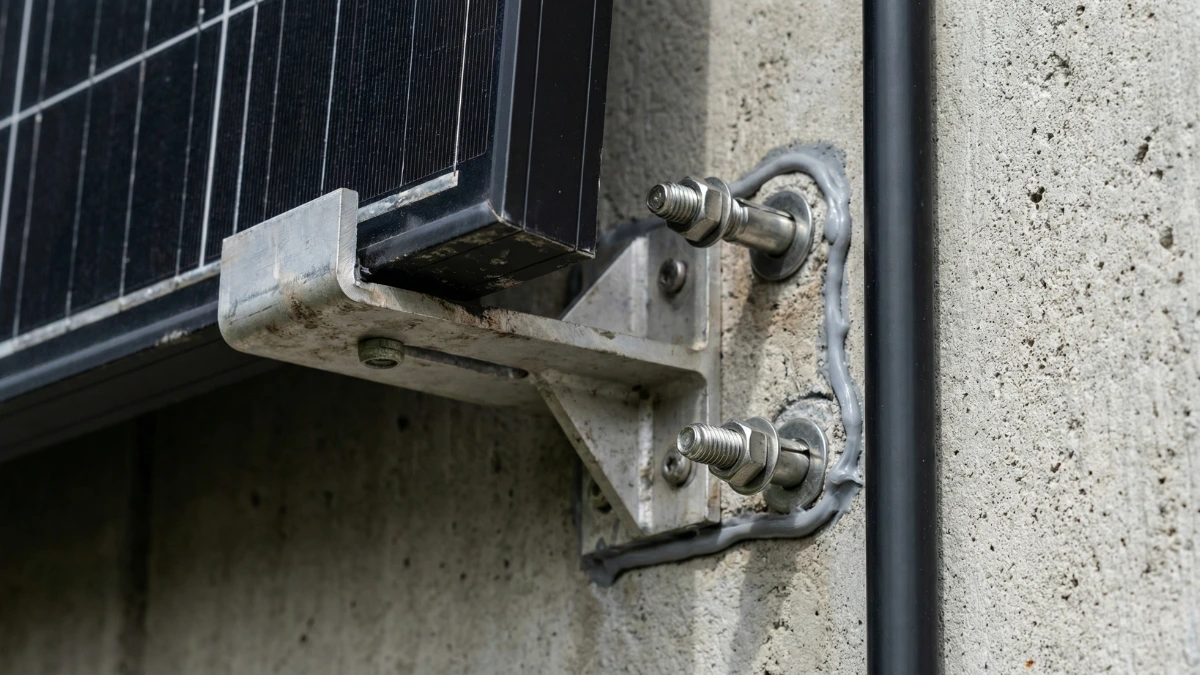
Best wall direction
Northern hemisphere:
- Prioritise south-facing walls, then west- or southwest-facing walls
- East can work if your loads are morning-heavy, but evenings will be weaker
Southern Hemisphere:
- Prioritise north-facing, then northwest or northeast
In all cases, avoid walls that get almost no direct sun in winter.
Mounting brackets
Use:
- Aluminium alloy brackets
- Stainless steel anchor bolts
- Corrosion-resistant hardware
For hardware basics, review our solar panel roof mount guide.
Waterproofing risks
Every drilled hole should have:
- Appropriate sealant (UV- and weather-resistant)
- Caps or flashing where needed
- Careful detailing around any insulation or rain-screen layers
Skipping this step can result in gradual wall damage, mould growth, and disputes with building management.
Cable routing
Best practices:
- Run DC cables in UV-rated conduit
- Avoid sharp edges and dangling external cables
- Keep cable runs as short as practical between panels and the inverter
- Respect fire-safety rules for penetrations through walls, corridors, and shared spaces
When to hire professionals
Bring in a qualified installer or engineer if:
- The system is above 1 kW
- You are on the second or third floor
- The wall is insulated or uses complex cladding
- You are connecting to the grid, net metering, or backup circuits rather than a plug-in microinverter
DIY can work for very small balcony kits that feed a single socket, but even then, you should confirm compliance with local codes and building rules.
Wall vs Roof Solar Panels
Here is a simplified comparison of wall mounted solar panels with typical roof systems of similar size on a decent site.
| Feature | Wall Mounted Solar Panels | Roof Mounted Solar Panels |
|---|---|---|
| Annual Energy Output | Around 10–30% lower due to less optimal tilt and more shading risk. | Highest yield when oriented and tilted correctly with minimal shading. |
| Cost per Watt | Similar or slightly higher because of custom brackets, anchoring, and access complexity. | Often, the lowest cost per watt due to standardized racking and workflows. |
| Installation Complexity | More structural checks, waterproofing, and facade access planning. | Well-understood process for most installers, simpler structural assessment. |
| Maintenance | Easier cleaning access on low- to mid-rise walls; less dust buildup. | May need roof access gear or professionals; more soiling on shallow tilts. |
| Wind Exposure | Higher local wind pressure on facades and corners; hardware must be carefully rated. | Loads are more evenly distributed, but uplift remains critical at the roof edges. |
| Best Suited For | Apartments, small urban homes, visible sustainability features, and renters. | Detached or semi-detached homes with good roofs, especially those targeting maximum ROI. |
If you have a strong, unshaded roof, a classic roof array will almost always win on raw kWh and payback. However, not every property offers that option.
Cost Breakdown
Pricing always depends on your market, access, and hardware, but we can sketch realistic 2026 ballparks for typical small systems.
Based on 2025–2026 installer pricing trends in urban U.S. and Indian markets, wall-mounted systems typically cost 5–15% more per watt than comparable roof systems due to custom mounting and labour complexity.
| System Type / Size | Typical 2026 Installed Cost (USD) | Notes |
|---|---|---|
| 500–800 W Balcony or Wall Kit with Microinverter | $700 – $1,400 | Apartment-focused kits, often semi-DIY, limited permits. |
| 1–2 kW Wall Array for Small Home or Office | $1,800 – $4,000 | Professional design and custom brackets increase cost per watt. |
| 3–5 kW Facade System for Urban Home/Office | $4,500 – $9,000 | May require scaffolding, structural review, and higher-grade hardware. |
| Add-On Wall Array Feeding a Solar Generator | $800 – $3,000 | Uses existing portable power station; cost mainly panels + mounts. |
Costs increase due to:
- Heavy-duty brackets
- Wall reinforcement
- Waterproof sealing
Before investing, calculate payback using our
Solar ROI Calculator (India & U.S.)
Wind Load and Structural Safety
Wind is the most underrated risk in wall mounted solar panel projects.
Vertical panels “catch” wind more directly than sloped roof modules. On high-rise corners or exposed boundary walls, gusts can create strong suction and pressure forces that get transferred straight into brackets and anchors.
Key safety points:
- Structural assessment first
A competent engineer or experienced installer should confirm that:- The wall or boundary structure can handle the combined weight and wind loads.
- No hollow sections are being used as primary anchor points.
- Proper anchoring
Use anchors and bolts rated for your wall material and local wind zoning. Avoid:- Plastic plugs
- Undersized expansion bolts
- Random fasteners not rated for structural loads
- Panel layout and spacing
Leaving small gaps between panels:- Reduces suction effects
- Improves airflow and cooling
- Makes inspections and cleaning easier
- Edge and corner awareness
Wind speeds and pressures are highest near building edges and corners. Mounting there is possible, but must follow stricter spacing and anchoring guidelines. - Regular inspections
After major storms, check:- Brackets and bolts for movement
- Cracks around anchor points
- Any sign of vibration damage
For boundary walls carrying an “off-grid wall solar system,” foundations and columns might need reinforcement before you hang several kilowatts of panels on them.
For general homeowner solar planning benchmarks, it’s worth reviewing the official guidance from the U.S. Department of Energy.
Legal & HOA Considerations
In apartments and managed communities, the paperwork can be more painful than the engineering.
Common constraints:
- Building codes and electrical rules
Some regions now have explicit rules for small plug-in balcony and wall systems, including:- Maximum allowed power
- Connector types
- How can they be tied into internal circuits?
- HOA / society bylaws
Many societies restrict:- Visible facade changes
- Wall penetrations
- Any hardware visible from the street or courtyard
- Written approval is often mandatory before you mount anything externally
- Fire and safety regulations
Routing cables through shared corridors, stairwells, or over balconies must comply with fire regulations and not block emergency access. - Utility and metering approvals
If your wall mounted solar panels feed into the main panel with net metering:- Expect the same application process as rooftop solar.
- Include inspection, metering changes, and sometimes export caps.
Some jurisdictions treat very small balcony solar panels more like appliances, with simplified rules, but you should still confirm details with your local authority and utility before buying hardware.
Are Wall Mounted Solar Panels Worth It in 2026?
The short answer: it depends entirely on your constraints and expectations.
They usually make sense when:
- You do not control or trust the roof (tenants, apartments, older structures).
- You have at least a few hours of direct sun on a wall or balcony most days.
- Local power prices are high, and even modest kWh savings matter.
- You value resilience and want to feed a home backup or solar generator rather than maximise export income.
They are less attractive when:
- You have a strong, unshaded roof that is available and legally usable.
- Your facade is heavily shaded by other buildings most of the year.
- Your HOA or city makes external modifications painful or risky.
For most urban dwellers, wall mounted solar panels are a practical compromise—not a miracle solution.
FAQ: Wall Mounted Solar Panels
Are wall mounted solar panels efficient?
In terms of panel efficiency, they use the same modules on a roof; the difference lies in the geometry. Expect about 70–90% of the annual energy of an optimally tilted roof array at the same wattage.
Do wall mounted solar panels always produce less power than roof systems?
In most cases, yes, over a full year. The vertical orientation and higher shading risk typically cut total kWh, even though winter and shoulder-season performance can be relatively strong.
Can you install solar panels vertically on a wall?
Yes. Vertical and near-vertical PV installations on facades, balcony fronts, and boundary walls are common in urban solar projects, provided structural and wind loads are properly handled.
Are wall mounted solar panels suitable for apartments?
They are among the most practical solar options for apartments with sun-exposed walls or balconies, especially for small 500 W–2 kW setups powering essentials or a solar generator.
What is the best direction for wall mounted solar panels?
In the Northern Hemisphere, a south-facing wall provides the best yearly balance, while west- or southwest-facing walls support strong afternoon output. In the Southern Hemisphere, aim for north-facing walls first.
How much do wall mounted solar panels cost in 2026?
As a rough guide, small 500–800 W apartment kits often fall in the 700–1,400 USD installed range, while 1–2 kW wall systems for homes or offices typically range from 1,800 to 4,000 USD.
Do wall mounted systems need special brackets?
Yes. They require purpose-designed, wall-rated brackets and anchors that tie into structural material and are tested for your local wind zone; using generic light-duty hardware is unsafe.
Are wall mounted solar panels good for winter?
They can be. Because the sun sits lower in winter, vertical panels often see more direct light than in summer, so their relative winter contribution can be quite strong—useful in cold regions with higher seasonal loads.
Can wall mounted solar panels work with solar generators and portable power stations?
Yes, wall mounted solar panels can work very effectively with solar generators and portable power stations. You can either connect them directly through the DC input of a compatible power station or use a microinverter to feed AC power into a dedicated outlet circuit.
Are wall mounted solar panels better than balcony solar panels?
Neither option is automatically better. Fixed wall systems can support more capacity and permanent wiring; balcony solar panels shine for renters who need removable, plug-in solutions. Many urban users run both.
Final Verdict
In 2026, wall mounted solar panels are not replacing rooftop solar—but they are absolutely coming into their own as a smart, compromise solution for apartments, renters, and compact urban homes.
If you:
- Accept the 10–30% hit on annual output
- Invest in proper anchoring, waterproofing, and wind safety
- Confirm legal and HOA approval before drilling
Then, wall mounted solar panels can turn an unused facade into a compliant and productive energy asset.
About the Author

SolarGizmoGuide is an independent solar research and publishing platform focused on practical, real-world solar solutions for urban homes and apartments. Our editorial team analyzes solar gadgets, mounting systems, backup power systems, and portable solar technology to help readers make informed investment decisions.
All content is based on independent research, manufacturer technical documentation, and publicly available performance data. Articles are reviewed and updated periodically to reflect current installation standards, safety considerations, and evolving solar technology.