
Last Updated on February 25, 2026 by dhruwuttam58@gmail.com
Introduction
Solar devices are no longer just niche gadgets; they are essential items that are changing lives worldwide. In 2026, the wave of advanced, reliable, and affordable solar-powered devices is transforming homes, workplaces, travel, and entire communities.
From smart IoT-enabled wearables to solar-powered appliances, the solar revolution offers opportunities for savings, energy independence, and sustainability.
This guide explains current technologies, real-world applications, scientific advancements, and the future of solar-powered living.
If you’re a tech-savvy, eco-conscious homeowner or simply interested in the potential of solar technology, discover how sunlight can power a more sustainable, eco-friendly lifestyle.
Table of Contents
How Solar Technology Is Used in Daily Life
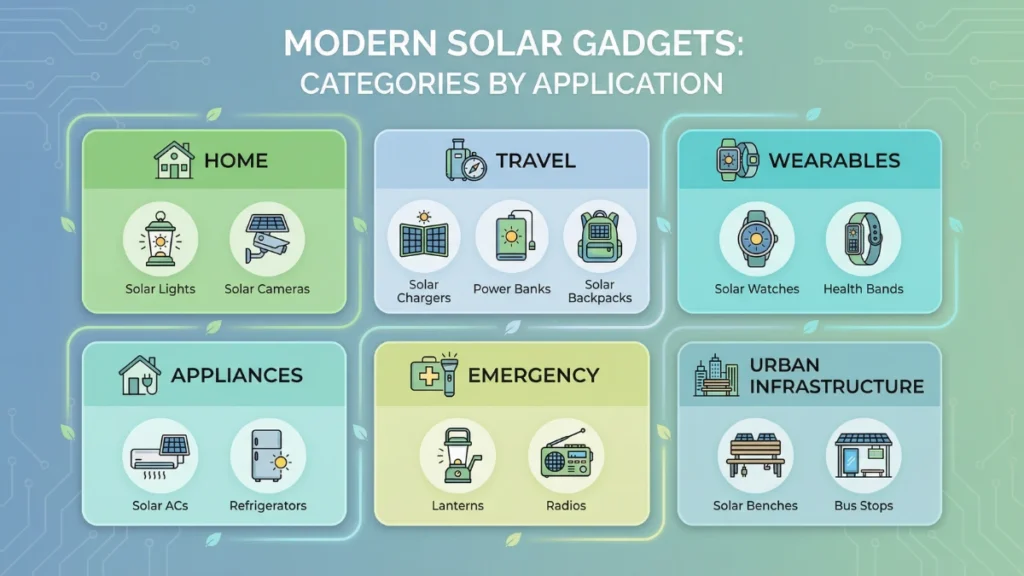
Solar-Powered Homes
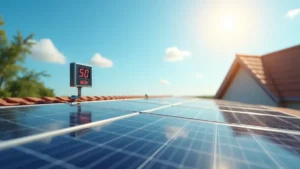
Solar power for homes goes far beyond rooftop panels. Today, solar-powered lighting systems come equipped with intelligent motion sensors that provide nighttime security without dependence on the grid.
These systems are now more cost-effective and efficient, powered by high-capacity lithium batteries that provide longer-lasting, more intense lighting.
Solar water heaters and hybrid AC units significantly reduce conventional energy use, and smaller solar garden lighting and decorative fixtures provide ambience and functionality for rural and urban homes.
Solar-powered security cameras and sensors help make homes safer by providing automated surveillance systems that do not require wiring.
- Solar Lighting: Intelligent motion-sensing outdoor and indoor lights that are completely off the grid
- Solar Security Systems: Wireless sensors, cameras, and alarms that are powered by the sun, allowing security 24/7
- Solar HVAC and Solar Fans: Future-generation low-wattage HVAC and air-conditioning systems significantly reduce electricity use.
- Solar Heaters: Effective solar panels on the roof or as stand-alone units to save on utility costs
Charging on the Go
Solar-powered portable chargers, power banks, and wearable devices are revolutionizing how we power and use our electronics.
Solar power banks are leveraging modern monocrystalline and perovskite solar cells (a new high-efficiency solar material) technology to offer quick charging even on cloudy days.
Students, travelers, and remote workers use solar backpacks with flexible panels that allow devices to charge while they move.
Wearable fitness bands and smartwatches with thin-film solar strips provide extended battery life with only a few minutes of sunlight each day.
Emergency evacuation kits for camping and hiking include compact solar lanterns and radios to ensure your family’s safety, working even without grid power.
If you are looking for robust power solutions for mobile use that seamlessly integrate solar panel systems, brands like Jackery offer portable power stations suitable for extended travel.
- Wearable Solar Devices: Such as fitness trackers, smartwatches, and health bands that are infused with transparent, flexible solar cells, removing the requirement to charge your device regularly
- Solar Backpacks and Portable Chargers: Designed for students, commuters, and travelers, they can charge tablets, smartphones, and wireless earbuds with ease in sunlight
- Solar Power Banks: New lithium titanium oxide (LTO) batteries store energy more quickly and provide greater capacity for everyday and emergency usage
To see concrete product examples that fit these use cases, check out ‘The 10 Must-Have Solar Energy Gadgets for a Sustainable Lifestyle’ for a curated gadget list.
Smart and IoT-Enabled Solar Gadgets
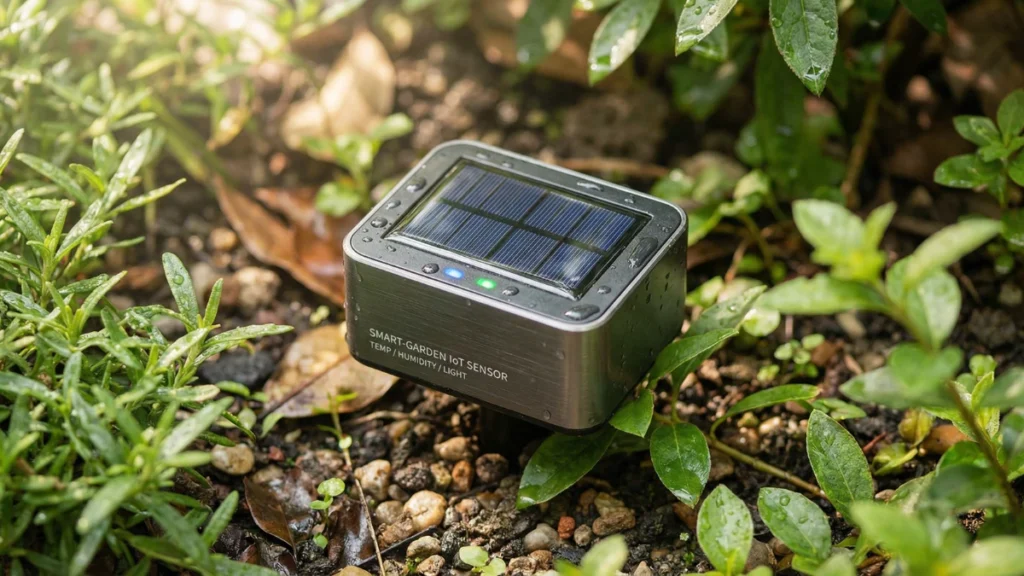
IoT connectivity has brought automation and intelligence to solar-powered devices.
Solar-powered sensors for environmental monitoring analyze air quality, humidity, soil moisture, and more, sending real-time information to smartphones and home automation devices.
Smart irrigation controllers for gardens powered entirely by solar energy help keep lawns and plants healthy, saving energy and water.
AI-driven solar systems optimize energy consumption by adjusting light intensity and operating schedules in response to weather and usage patterns.
These AI-powered solar systems are driving the next wave of intelligent urban solutions and sustainable, automated homes.
- Smart Solar Sensors: Indoor, garden sensors, or city sensors to monitor soil quality, air quality, security, and energy, all powered by miniature solar panels
- IoT-Integrated Home Systems: Intelligent hubs as well as speakers operate using both sunlight and grid, maximizing uptime and reducing carbon footprint
Types of Solar-Powered Gadgets
Solar Chargers and Power Banks
The most recent solar chargers have weather-proof, foldable panels that make them easy to transport and set up in various places.
Wireless solar mats support a wide range of devices and employ rapid-charge protocols compatible with modern electronic devices.
Solar generators have become indispensable backup options, supplying power to essential appliances during power outages and providing off-grid power for outdoor events.
If you’re looking for compact yet powerful solar generators to keep your devices charged during blackouts or camping excursions, Allpowers offers lightweight, highly expandable options.
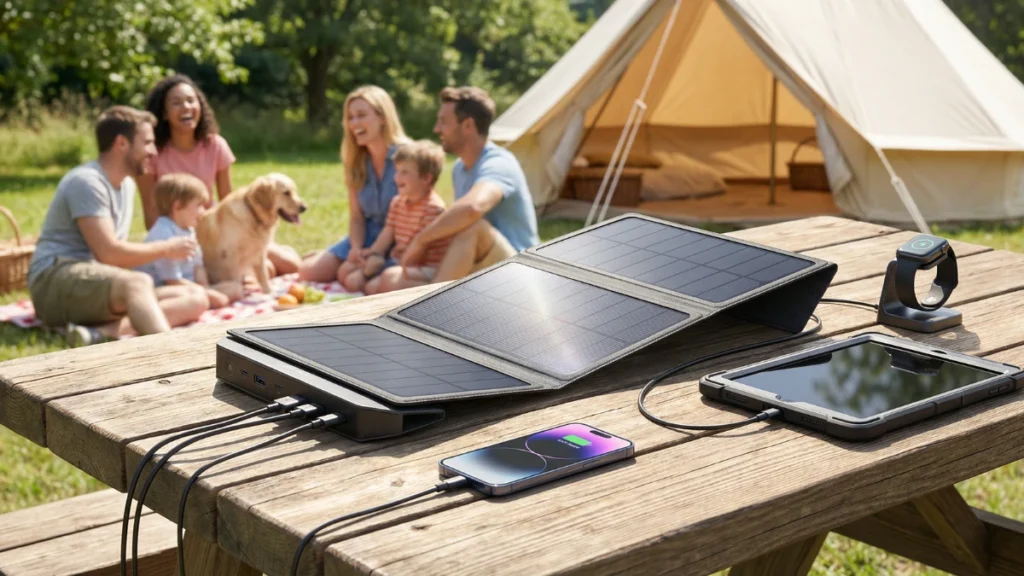
- Lightweight, high-efficiency monocrystalline panels typically offer 20-23% efficiency; some models maintain performance in low-light conditions.
- Ultra-thin solar panels are foldable, ideal for hiking, camping, and other outdoor activities.
- Solar charging mats with wireless solar technology for different devices.
Solar Lights (Outdoor/Indoor)
Solar-powered outdoor lighting has evolved to include sensors, high-efficiency LED technology, and durable waterproof designs.
Solar lights for interiors are designed to provide both ambient lighting and emergency illumination. They are equipped with charging indicators and smart switches that adapt to the sun’s conditions and the user’s needs.
Decorative solar fairy lights, as well as path markings, are becoming sought after in public gardens and landscapes, using sunlight to create visually appealing lighting effects.
- LED solar lamps that run from dusk to dawn offer 90+ CRI light, longer battery life, and weatherproofing.
- Bright driveway lights and path lights sync up with home automation systems.
- Solar lanterns for emergencies and camping use
Solar Cookers and Kitchen Gadgets
Solar kitchen appliances now extend beyond basic tools to include ovens. Solar kettles can quickly boil water with concentrated solar lenses.
Solar-powered food dehydrators produce healthy snacks from fruits and vegetables using the sun’s energy. These devices play a crucial role in off-grid living, outdoor cooking, and areas without power.
Rural communities are adopting these devices to cut down on bottled fuels and firewood, and to improve their environmental footprint and health.
- Solar ovens can reach 250°C using dual-axis tracking. For example, parabolic dishes reach 200-300°C. However, box ovens can reach 200°C. Commercial models reach 204-250°C under direct sunlight; tracking increases by 20-50%.
- Water purifiers and solar-powered kettles are needed to plan outdoor activities, as well as drinking water from a safe source in urban or remote regions.
Wearable Solar Devices
Manufacturers of clothing are now incorporating ultra-light, flexible solar cells in jackets, backpacks, and hats that provide continuous power to tiny devices like earbuds and fitness trackers.
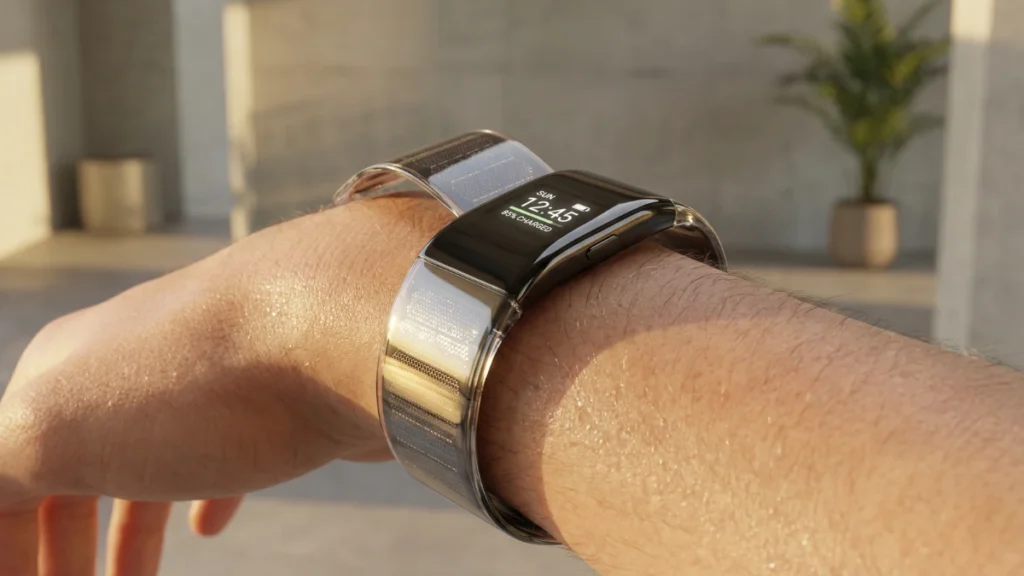
In healthcare, the latest research on solar-powered wearable ECG patches and glucose monitoring devices is enabling continuous medical supervision for patients living in remote areas without electricity.
- Flexible solar panels that can be woven into items, such as smart jackets, solar-powered caps, or backpacks
- Health wearables (e.g., intelligent ECG patches) that draw power continuously from sunlight
Solar Appliances (ACs, Refrigerators, Pumps)
Next-generation solar appliances — including DC refrigerators, washing machines, and irrigation pumps — are optimized for direct solar operation, reducing energy demand and providing resilience in regions prone to outages.
Solar-powered air conditioners are suitable in dry and tropical environments, providing comfort while emitting lower carbon emissions.
For home refrigeration that operates off-grid, Bluetti’s DC models offer high efficiency without the need for inverters.
- Direct Solar DC refrigerators are now more efficient than conventional ones in off-grid environments (20-30% more efficient than comparable conventional models, without inverter losses, needing three times less power to run the panel)
- Solar irrigation pumps and water pumps equipped with remote IoT monitoring
- Solar washing machines for efficient, eco-friendly laundry
Automotive and Urban Solar Gadgets
Cities are embracing solar technology by installing solar-powered charging stations for electric vehicles, stand-alone solar cooling fans for cars parked in parking lots, and public infrastructure such as benches, waste bins, and bus shelters, which are fitted with mini solar panels that power lighting, Wi-Fi, and security systems.
All of these are contributing to green urban living and less grid strain.
- Solar car coolers and parking-ventilation fans
- Solar-powered charging units for EVs to charge commercial and residential parking
- Urban infrastructure includes solar-powered bus shelters, bench seating, and signs.
Top Emerging Solar Gadgets in 2026
Latest Launches and Market Leaders
- Perovskite-based portable chargers are emerging in the pilot stages. They are lightweight, flexible, and swift, with early availability in niches (market estimated at USD 267 million by 2026)
- Bifacial solar panels (capture the sun’s rays from two sides) for better yields
- Transparent solar windows are being piloted in smart offices and homes for quiet energy harvesting. With an efficiency of around 10-12%
- Smart solar backpacks with AI-driven energy optimization
- New generation solar-powered home assistants, as well as purifiers
Research-Backed Innovations
- Quantum dots and tandem cell devices — emerging technologies designed to increase solar efficiency: Small electronics are starting to integrate these advanced cells into pilots to increase solar energy conversion by 20-30% and retain more energy in smaller form factors (efficiencies as high as 25.9% in 2020 pilots).
- Some experimental panels can self-clean and self-repair under specific conditions: Maintaining peak performance without user intervention, which is essential for outdoor wearables.
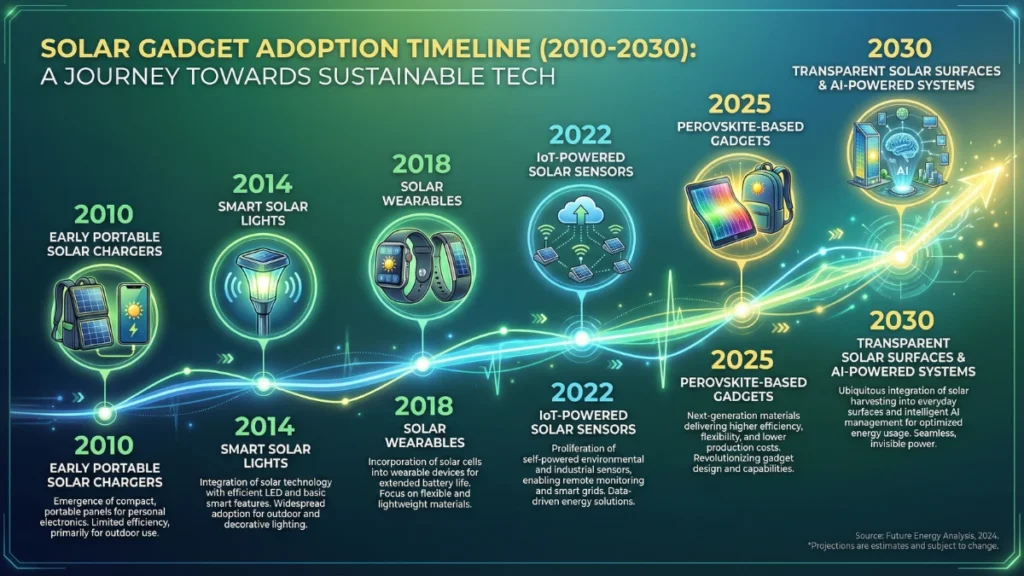
Future-Ready: AI and Blockchain in Solar Devices
- Intelligent home energy management using AI for homes: Discovers patterns of use to automatically switch devices to solar power when the conditions are optimal
- Blockchain-based solar devices for peer-to-peer sharing to facilitate local energy trading and microgrids for community use
Benefits of Solar-Powered Devices
Energy Independence and Savings
For homeowners, solar appliances are a significant source of savings.
Reports suggest up to an 80% decrease in energy bills (e.g., lighting and charging) for homes that incorporate solar-powered lights, chargers, and appliances, with complete systems that can provide even greater savings.
Portable solar panels reduce reliance on grid power, allowing the rural community and travelers to feel more independent and resilient.
Environmental and Health Impact
Every solar-powered light or device replaces carbon-intensive alternatives, preventing emissions and hazardous pollution — mainly where kerosene lamps or disposable battery systems previously dominated.
Health benefits are derived from healthier air and better lighting, particularly for vulnerable groups and children.
Reliability and Everyday Convenience
Modern solar appliances are designed to last, typically 5 to 10 years with minimal maintenance. Most batteries need replacement every 3-7 years (some premium lithium-ion models can last up to 10-15 years). Their plug-and-play simplicity makes them accessible to new users and easy to use in offices and homes.
Continuous improvement in battery capacity and design guarantees that gadgets will provide reliable service all year round.
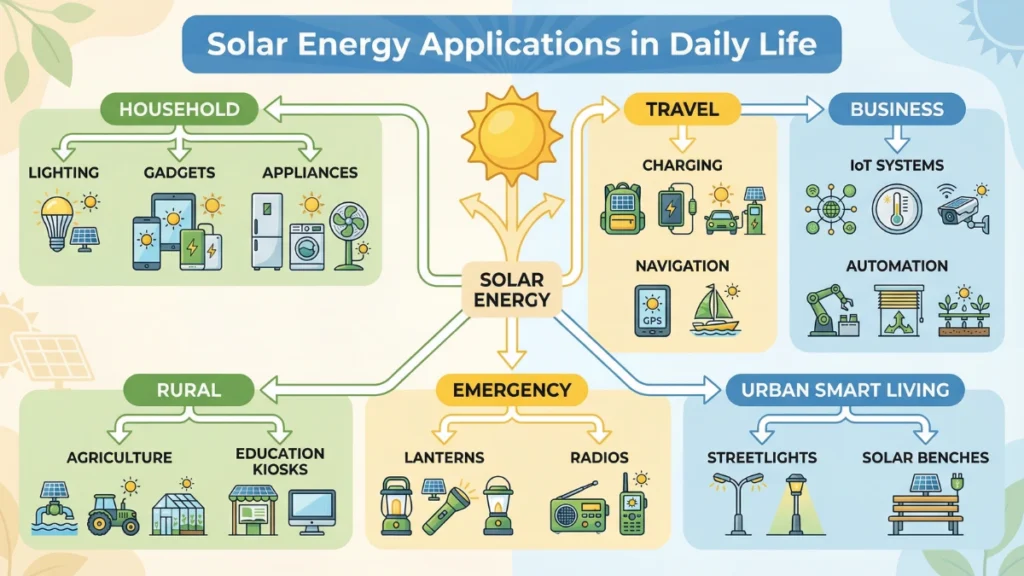
Solar Energy Applications in Everyday Life
Urban Smart Living:
Solar panels are now integrated into apartment balconies and windows, powering small appliances and lighting without additional installation.
Smart streetlights, bus stops, and even traffic signals are powered by solar energy, allowing additional services during grid outages.
Solar-powered irrigation systems and waste compactors help improve urban areas and clean public spaces.
Rural Transformation:
Off-grid solar lighting can transform healthcare and education, keeping schools open at night and hospitals operating crucial refrigeration for medical treatment.
Solar internet kiosks enable digital inclusion, and solar pumps improve agriculture by supplying reliable water even during grid interruptions.
Emergency and Off-Grid Solutions:
The emergency relief industry increasingly relies on radios, solar lanterns, and portable battery banks for communication and safety.
These devices have proven their energy-saving benefits in storm-prone or earthquake-prone areas, providing illumination and power when conventional infrastructure fails.
Real-Life Use Cases and Practical Examples
Households:
In urban areas, solar kitchen appliances can make meal preparation easier while cutting costs.
Smart solar gadgets let people living in apartments charge their devices on balconies, thus reducing grid dependence.
Rural areas can install solar-powered lanterns and water heaters to gain health and financial benefits.
Travel & Adventure:
Solar batteries and camping lights are essential items for trekkers, cyclists, and climbers.
The solar panels built into jackets and backpacks allow travelers to recharge their mobile phones and GPS devices on long trips, even far from power outlets.
Community Projects:
Local and non-profit organizations set up solar-powered classrooms, health centers, and kiosks to bridge gaps in access to digital technology and support community development in regions where it is most needed.
Businesses and Urban Infrastructure:
The solar benches in parks can provide wireless charging and Wi-Fi, powered by the integrated cell.
Offices and cafes are increasingly opting for solar-powered outdoor lighting and decor to promote sustainability and save costs.
Municipalities install solar sensors and smart trash bins to optimize public services and security.
The Future of Solar Gadgets (2026-2030)
Efficiency Improvements (Batteries, Materials)
Battery technology is rapidly advancing, and lithium-silicon and solid-state batteries are set to offer twice the capacity of current batteries.
Advancements in recycling materials mean that over 95% of today’s solar products can be reused, reducing environmental impact.
Ultra-thin, flexible solar cells are increasingly found in consumer products, wearables, and architecture.
Market Growth and Adoption Statistics
The market for solar devices is growing rapidly as adoption rates reach new records. By 2026, adoption in India is estimated at 10-20% in solar-friendly states like Gujarat or Rajasthan, driven by subsidies.
Analysts project that the consumer solar devices market may reach $5-10 billion, contributing to the broader solar PV market exceeding $180 billion by 2030 (projected to grow from $613B in 2026 to $968B in 2030, as estimated by “MarketsandMarkets“).
These developments reflect rising consumer awareness and favorable policies that are driving the transition to green living.
Next-Gen Technologies and Predictions
In the future, we can anticipate the widespread adoption of AI-managed solar-powered home appliances, the widespread use of transparent solar cells in everyday clothing and urban infrastructure, and the rise of entirely off-grid homes.
As technology becomes smaller, more innovative, and more efficient, the transformation of solar energy in everyday life is expected to accelerate, bringing energy freedom to millions worldwide.
How to Choose the Right Solar Gadgets
Needs Assessment Checklist:
- What do you want to power: charging, lighting, appliances, security?
- Calculate the energy requirements (watts and hours of usage)
- Assess the amount of sunlight available in your local area
Brand, Warranty, and Support:
- Choose reputable brands that have established after-sales service
- Find devices with a minimum 5-7+ year warranty
Cost vs. Long-Term Value:
- Compare upfront costs with projected savings over 5 to 10 years
- Find local government solar incentives as well as rebates
FAQs
1. What are the main types of solar-powered gadgets?
Solar-powered gadgets include lights, chargers, power banks, kitchen appliances, wearables, security devices, and smart home devices.
2. How is solar technology used in daily life?
Solar technology powers lighting, appliances, water heating, security, mobile device charging, and smart sensor operation in the home and urban environments.
3. What are the benefits of solar-powered devices?
They save energy costs, reduce carbon footprint, ensure reliability during outages, and support off-grid living.
4. What are the top emerging solar gadgets in 2026?
Perovskite chargers in pilot stages, bifacial gadgets, transparent solar panels in pilots, AI-powered home assistants, and smart solar backpacks are leading innovations.
5. How efficient are modern solar gadgets?
Latest gadgets use monocrystalline cells with efficiencies of 20-23%, with emerging quantum dot and tandem cells reaching up to 25% in pilots, storing more energy and charging faster.
6. Can solar gadgets power an entire home?
While small gadgets supplement daily use, combining them with solar rooftop panels and batteries can power most, if not all, household needs.
7. Are wearable solar gadgets reliable?
Yes, new, flexible, and transparent cells make wearables efficient, durable, and comfortable, providing sufficient power for health and fitness devices, though integration in healthcare applications remains experimental.
8. What is the lifespan of a solar gadget?
Modern solar gadgets typically last 5–10 years, depending on quality, usage, and maintenance, with batteries often requiring replacement every 3-7 years.
9. How to choose the best solar-powered device?
Assess your needs, energy requirements, brand reputation, warranty, and check for certification and government incentives.
10. What are the future trends for solar gadgets (2026–2030)?
Expect higher efficiency, AI integration, transparent/flexible gadgets, and mainstream adoption of community solar sharing.
11. What role do solar gadgets play in emergencies?
They provide critical lighting, charging, and communication tools in disaster relief and off-grid situations.
12. Can solar gadgets be integrated with smart home systems?
Yes, many 2026 devices offer IoT compatibility for easier monitoring and control.
13. Are solar gadgets suitable for urban and rural use?
They benefit both, offering off-grid digital services in rural areas and smart living in cities.
14. How does solar affect energy bills?
Solar gadgets can cut monthly electricity bills by up to 80% for targeted use (e.g., lighting and charging) and boost savings with solar mains integration (average 15% reduction for many households).
15. Do solar gadgets need direct sunlight?
Most modern gadgets operate in ambient light, but direct sunlight boosts efficiency and charging speed.
Conclusion
Solar-powered devices have driven significant change in modern lifestyles, offering savings, convenience, and sustainability. With continuous advancements in efficiency, cost, and advanced capabilities, solar-powered devices are now available to all, from urban inhabitants to rural communities. The integration of IoT and AI can further enhance sustainability and energy independence.
As technology adoption increases, it is set to continue revolutionizing how we engage with energy and create a better future for everyone.
About the Author

SolarGizmoGuide is an independent solar research and publishing platform focused on practical, real-world solar solutions for urban homes and apartments. Our editorial team analyzes solar gadgets, mounting systems, backup power systems, and portable solar technology to help readers make informed investment decisions.
All content is based on independent research, manufacturer technical documentation, and publicly available performance data. Articles are reviewed and updated periodically to reflect current installation standards, safety considerations, and evolving solar technology.