
Last Updated on May 7, 2026 by dhruwuttam58@gmail.com
Introduction
Electricity bills are rising, and in many cities, grid reliability still isn’t something you can fully trust. Whether you’re in the U.S., dealing with peak pricing, or in India, facing outages, the idea of generating your own power is becoming more practical—not just idealistic.
That’s where the O Wind Turbine is getting attention. It’s being promoted as a new kind of renewable energy solution designed specifically for urban environments—rooftops, balconies, and spaces where traditional wind turbines simply don’t work.
The key question: Is it actually useful, or just another overhyped innovation?
In this guide, I’ll break down how it works, where it makes sense, and whether it’s worth considering in 2026.
Table of Contents
What Is an O Wind Turbine? (Urban Renewable Energy Solution)
Simple Explanation
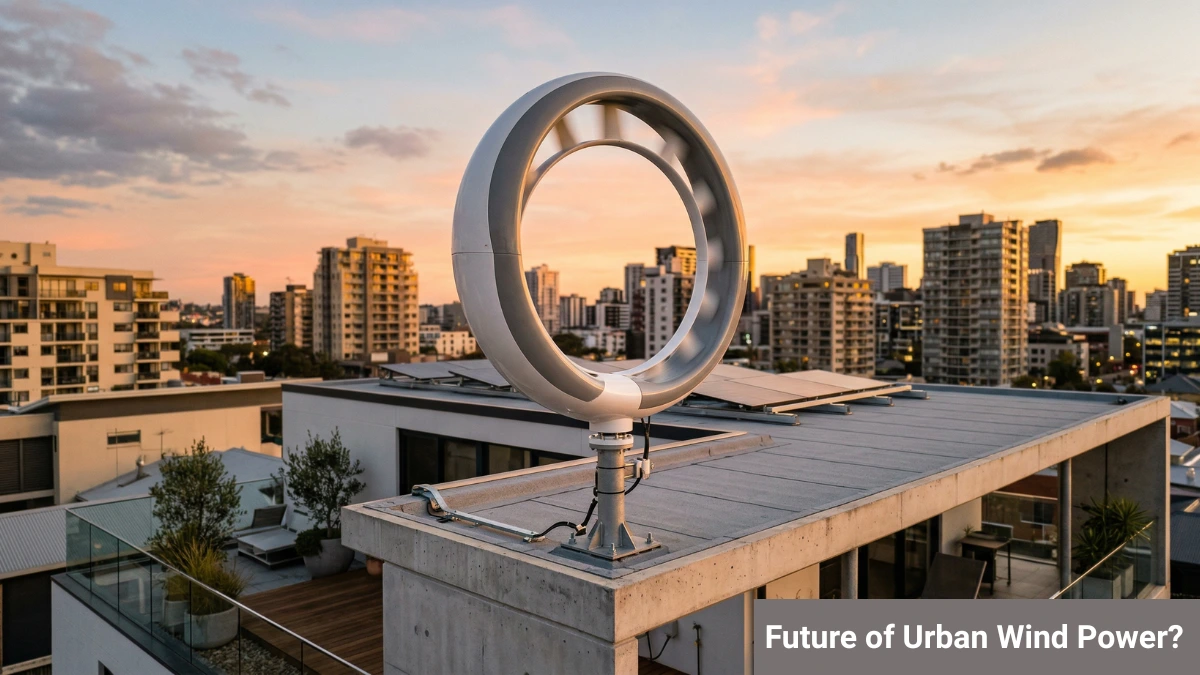
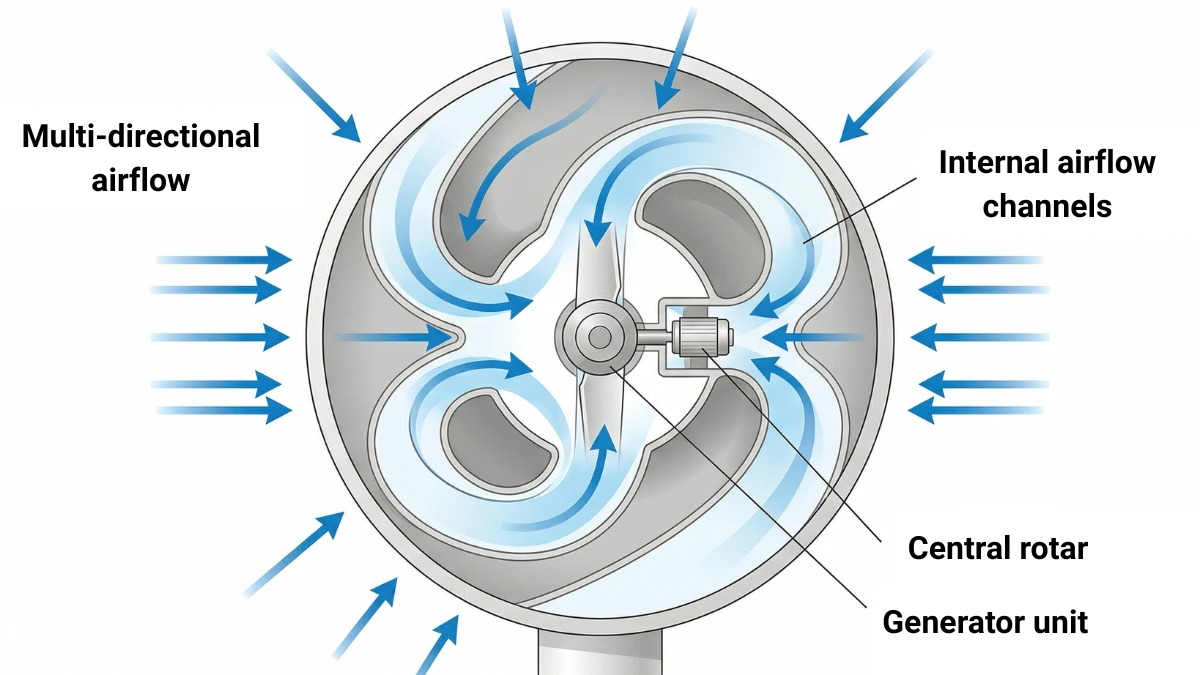
The O Wind Turbine is a bladeless, omnidirectional wind concept that aims to harvest wind from multiple directions, including shifting urban airflow. Instead of depending on a steady stream of wind from one direction, this concept, often referred to as the O-Wind Turbine, is designed to work with turbulent wind patterns caused by buildings and street canyons.
Why It’s Different from Traditional Wind Turbines
Traditional turbines usually perform best in open, consistent wind conditions, which is why they are common in rural or coastal sites rather than dense cities. The O-Wind Turbine is different because it is built for chaotic airflow and is marketed as quieter, safer, and more suitable for urban use.
How Does the O Wind Turbine Work?
Core Working Principle
The basic idea is simple: wind enters the structure from different angles, the internal airflow creates pressure differences, and that movement turns the mechanism connected to a generator. According to the developer, the design uses omnidirectional airflow handling and a Venturi-style effect to convert turbulent wind into rotational energy.
Key Components
The concept is built around a rounded or ring-like turbine body, internal channels that guide airflow, and a generator that converts rotation into electricity. The key value is not just shape but how the structure responds to wind that changes direction constantly in built-up areas.
Why It Works in Urban Environments
Cities create a lot of unpredictable wind around rooftops, towers, and open corridors between buildings. The O Wind Turbine is designed specifically for that kind of environment, where conventional blades often lose efficiency because airflow is often too unstable.
Can You Use a Wind Turbine at Home?
Ideal Use Cases
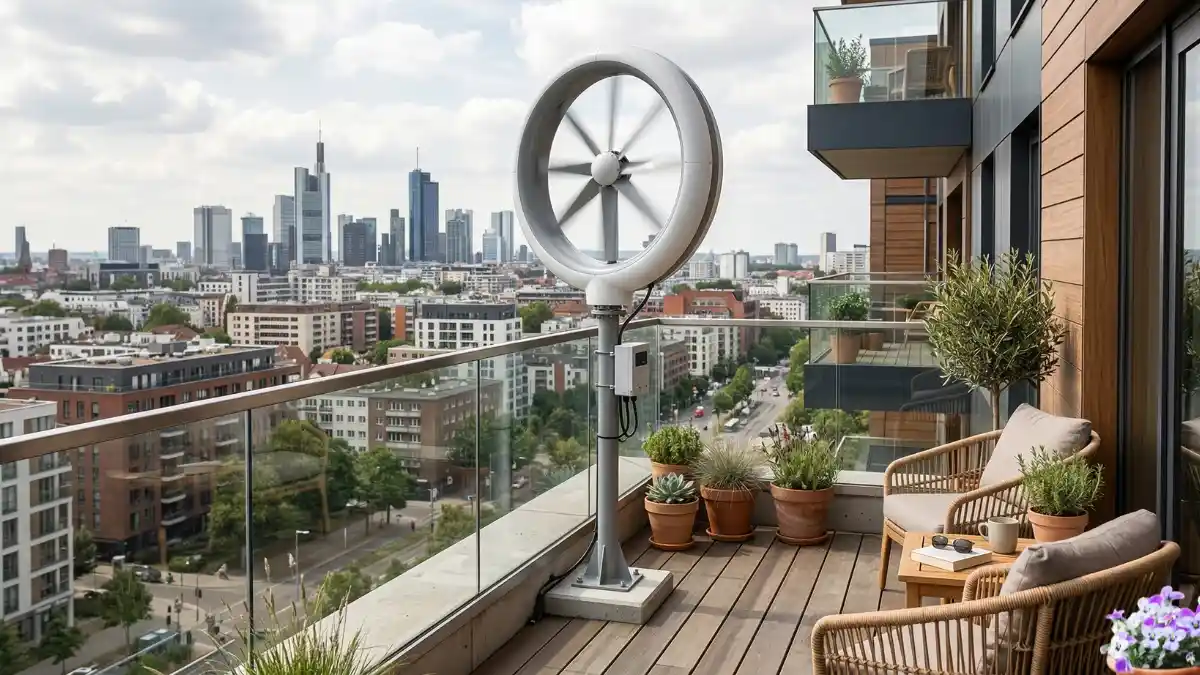
This technology makes the most sense for rooftop pilot setups, apartment buildings, small commercial properties, smart buildings, and urban developments with good wind exposure. It is also more relevant for users who cannot install large solar arrays but still want to explore a renewable energy solution for a partial offset.
Realistic Power Output
Here’s the honest part: do not expect household-level backup power from a compact urban wind device unless the site is unusually windy and well-positioned. The developer has suggested prototype-scale and future city-model systems may generate meaningful annual energy in good locations, but this is still not the same as a mature mass-market product with widely verified home-use output.
For most homeowners, the O Wind Turbine should be viewed as supplemental generation, not a primary electricity source. That matters because wind performance changes with site quality far more than many buyers expect.
O Wind Turbine vs Solar Panels
Key Differences
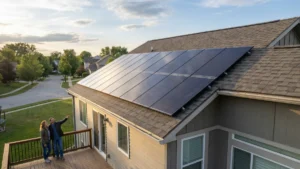
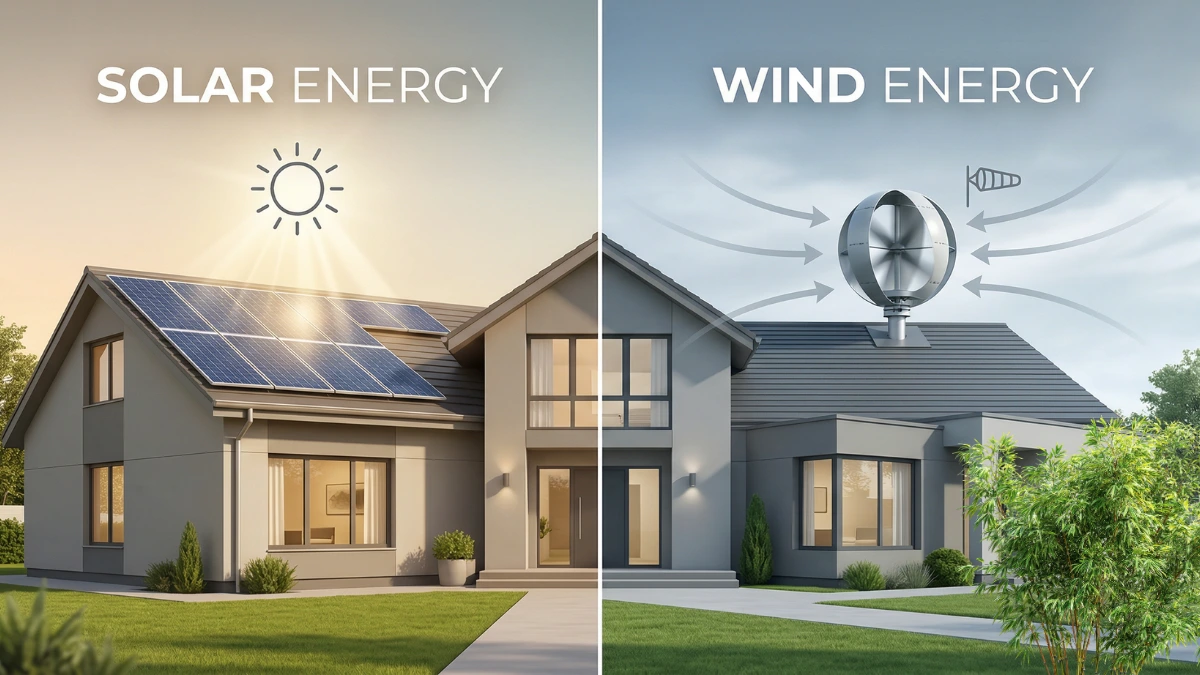
Solar panels convert sunlight, which is predictable in daytime and easier to scale for homes. The O Wind Turbine depends on wind quality, so its output can swing much more from one location to another.
When Wind Might Work Better
Wind may be more effective where sunlight is limited by shading, narrow streets, or tall buildings, especially if the site gets strong rooftop airflow. In that narrow use case, a compact turbine can complement solar rather than compete with it.
Why Solar Still Dominates
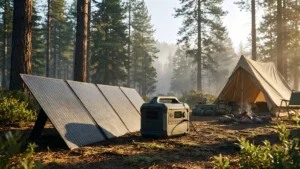
Solar still dominates because it is easier to buy, easier to install, and far more predictable in real-world use. For most homeowners, portable solar power solutions offer a much clearer return on investment compared to early-stage wind devices like the O Wind Turbine.
Cost, Availability & Market Status (2026)
Is It Available to Buy?
As of 2026, the O-Wind Turbine is still described as being in development rather than a fully mature consumer product. Public information points to a future launch window, but this is still a technology to watch, not a widely available mainstream purchase.
Expected Cost Range
Publicly circulated estimates have suggested a price range in the hundreds of euros for early units, but that should be treated cautiously because pricing can change before commercial release. For buyers, the bigger question is not just cost but whether the real-world output justifies the investment.
Should You Wait or Invest?
If you want dependable energy savings right now, waiting is the safer move unless you are an early adopter with a suitable site and a willingness to experiment. If your goal is practical household value in 2026, solar is still the more mature choice.
Advantages of an O Wind Turbine
- It is designed for wind coming from many directions, which fits urban airflow patterns better than many conventional turbines
- The bladeless concept can be quieter and safer in dense residential areas
- It may work where solar faces shading problems, such as narrow streets or heavily built-up rooftops
- It supports a broader mix of decentralized clean energy options for cities
- It could complement solar in a hybrid home or building energy setup
Limitations You Should Know
- It is still an early-stage technology, so availability is limited, and buying options may be uncertain
- Output is highly site-dependent, which makes claims about “home power” easy to overstate
- Wind systems need proper mounting, tower or rooftop assessment, and code compliance to be truly practical
- It is not a plug-and-play replacement for solar panels in most homes
- Real-world performance data for mass consumer use is still limited
Future of O Wind Turbine Technology
Role in Renewable Energy
The most realistic future for the O Wind Turbine is as a niche urban wind solution rather than a universal home-power product. That still matters because cities need cleaner ways to generate power locally without relying only on large solar arrays or distant wind farms.
Potential in Urban Energy Systems
If the technology matures, it could fit into smart buildings, rooftop energy systems, and mixed renewable setups for apartments and commercial properties. That kind of role is practical because urban wind is messy, and traditional turbine designs have never handled that problem especially well.
For a broader understanding of how small wind systems are evolving, you can refer to the U.S. Department of Energy’s official guide.
Is an O Wind Turbine Worth It in 2026?
Who Should Consider It
It is worth watching for people who live in windy urban locations, work on green building projects, or enjoy testing emerging clean-tech products before they go mainstream. Developers and property owners may also find it interesting if they are designing energy-forward buildings.
Who Should Avoid It
Most homeowners should avoid treating it as a primary power source in 2026, especially if they need reliable savings, easy installation, and predictable performance. If your goal is practical energy independence, solar remains the safer bet.
Quick Summary: O Wind Turbine (2026)
- The O Wind Turbine is a compact wind device designed for urban environments
- It captures wind from multiple directions (unlike traditional turbines)
- Current models produce low power (not suitable for full home use)
- Works best as a supplement to solar energy systems
- Still an early-stage technology with limited availability
- Promising concept, but not a practical primary solution in 2026
FAQs: O Wind Turbine (2026)
What is an O Wind Turbine and how does it work?
It’s a compact wind energy device designed to capture airflow from multiple directions. Instead of relying on steady wind like traditional turbines, it uses internal channels to guide air toward a central rotor, allowing it to generate power even in turbulent urban conditions.
Can this type of wind system power an entire home?
Not at the moment. Current designs produce relatively low output and are better suited for charging small devices or supporting a hybrid setup rather than running a full household.
Is an O Wind Turbine better than solar panels for home use?
In most cases, solar panels are more reliable and efficient for home energy. Solar provides consistent daytime power, while wind turbines depend heavily on local wind conditions. However, combining both can improve energy availability in certain situations.
Can you use an O Wind Turbine with a solar power system?
Yes, combining wind and solar can improve overall energy availability. Solar works during the day, while wind can generate power whenever airflow is present, making the setup more balanced in certain environments.
Is the O Wind Turbine available to buy in 2026?
It’s still in the early stages of development, with limited availability. Most versions are prototypes or in pre-commercial phases, so widespread adoption may take more time
Conclusion
The O Wind Turbine is a promising renewable energy solution, but it is still in its early stages and should be viewed realistically. It may become useful in urban energy systems, especially where rooftops, buildings, and wind corridors create favourable conditions.
For most people in 2026, the smartest approach is to treat it as a future-ready idea and pair it with solar for practical, dependable clean power today.
As a renewable energy solution, it shows potential—but for now, it works best as a complement rather than a replacement.