
Last Updated on May 7, 2026 by dhruwuttam58@gmail.com
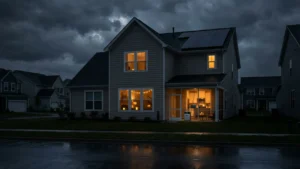
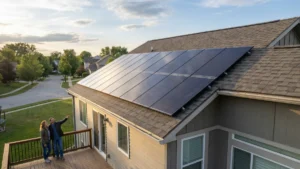
If you feel like power outages are getting more common, you’re not imagining it. Grid strain, storms, and heatwaves are causing more blackouts than most people remember from earlier decades. That’s exactly why solar emergency kits have gone from “prepper-only” gear to something normal families keep around the house or in the car. A good solar power survival kit lets you turn sunlight into backup electricity without fuel, noise, or fumes—making it far easier to live through outages or stay comfortable away from the grid.
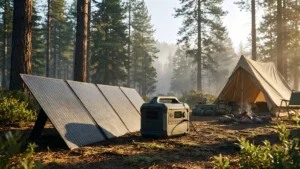
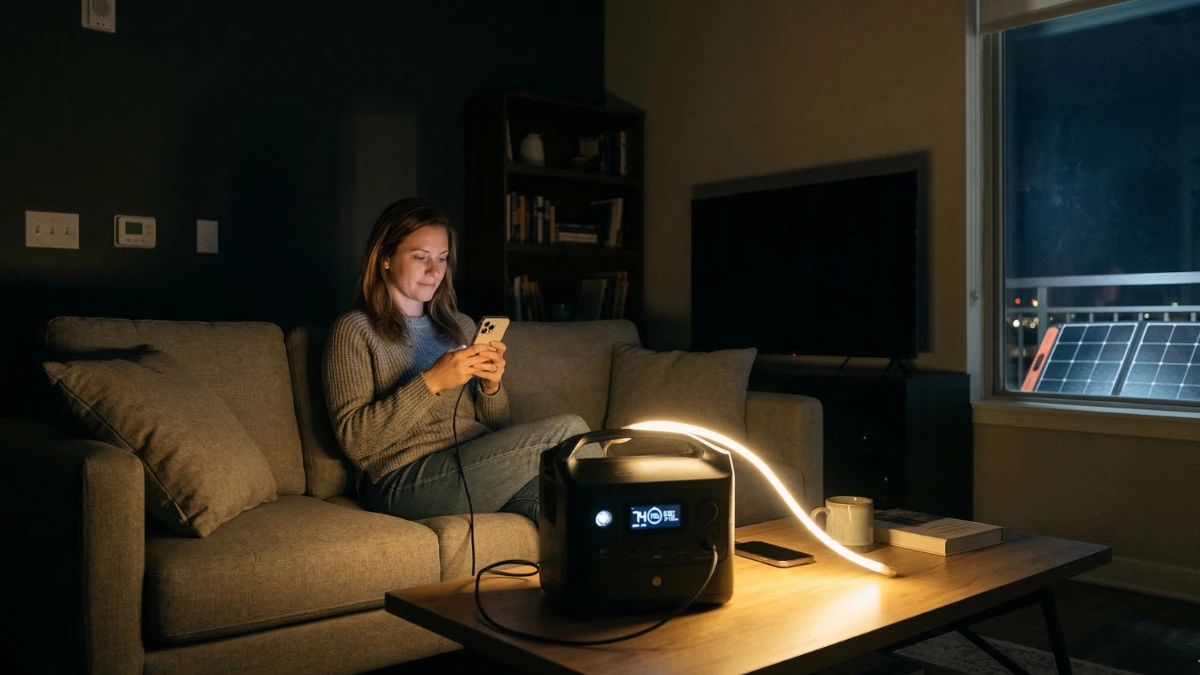
At a basic level, a solar kit combines a portable power station (your battery and outlets) with one or more foldable solar panels (your recharging system). Charge the station from the wall, car, or solar, then plug in phones, lights, small fridges, laptops, and medical devices when the grid drops. The same setup doubles as a portable solar kit for camping, RV trips, and remote cabins—equipment you will actually use, not just something that gathers dust until the next storm.
This post may contain affiliate links. If you buy through them, I may earn a small commission at no extra cost to you.
Table of Contents
Quick Solar Power Survival Kit Setup
Almost every reliable setup has four core pieces:
- A solar generator (portable power station) to store energy and provide AC and USB outlets.
- One or more portable solar panels to recharge the battery when the grid is down.
- Cables and adapters to connect everything safely.
- The “payload”: phones, lights, a small fridge, router, power bank, and critical devices.
Here’s a quick example of how a simple kit could look:
| Device Type | Recommended Product | Best Use |
|---|---|---|
| Solar Generator | EcoFlow DELTA 3 Check Price | Core emergency home power |
| Solar Generator | BLUETTI AC70 Check Price | Short outages & weekend trips |
| Compact Station |
BLUETTI EB3A
Check Price
ALLPOWERS R600 Check Price | Phones, lights, routers |
| Micro Unit | ALLPOWERS S200 Check Price | Ultra-light backup in a go-bag |
| Portable Panel | EcoFlow NextGen 220W Bifacial Panel Check Price | Fast solar charging, home & van |
| Portable Panel | BLUETTI 200W Solar Panel Check Price | Regular emergency recharging |
| Portable Panel | ALLPOWERS SP033 200W Solar Panel Check Price | Camping and vehicle-based kits |
In practice, your ideal solar power survival kit usually consists of “one power station + one 200–220W panel” to start—add more panels or a larger battery later as your budget allows.
Best Solar Generators for a Solar Power Survival Kit
The portable power station is the heart of any off grid solar survival kit. It decides what you can run (wattage), for how long (battery capacity), and how quickly you recover during long outages. Think of it as a silent, battery-based generator you can safely use indoors—no fumes, no fuel, far less maintenance than a petrol model.
EcoFlow DELTA 3 Portable Power Station
| Spec | Detail |
|---|---|
| Battery Capacity | 1024 Wh |
| Battery Type | LiFePO4 |
| AC Output | 1800 W (3600 W surge, 2200 W X-Boost) |
| Solar Input | Multiple fast recharge options |
| Weight | Medium, portable design |
| Best Use Case | Home backup & off-grid base unit |
The EcoFlow DELTA 3 sits in a sweet spot for most households: big enough to handle serious loads, yet portable enough to move between rooms or into the car. With 1024Wh capacity and 1800W AC output, it can power fridges, Wi-Fi routers, lights, laptops, fans, and phones simultaneously. X-Boost handles heavier appliance starts when needed.
For a solar power survival kit, the DELTA 3 makes an ideal central hub. Keep it plugged in day to day, then hook up solar panels during longer outages. Its expandable design (up to 15kWh with extra batteries) means you can scale from a single unit to a serious off grid solar survival kit without starting over.
Check the latest price and full specifications on the official EcoFlow websiteBLUETTI AC70 Portable Power Station
| Spec | Detail |
|---|---|
| Battery Capacity | 768 Wh |
| Battery Type | LiFePO4 |
| AC Output | 1000 W |
| Solar Input | Compatible with 200W class panels |
| Weight | Portable, easy to move |
| Best Use Case | Short outages, camping |
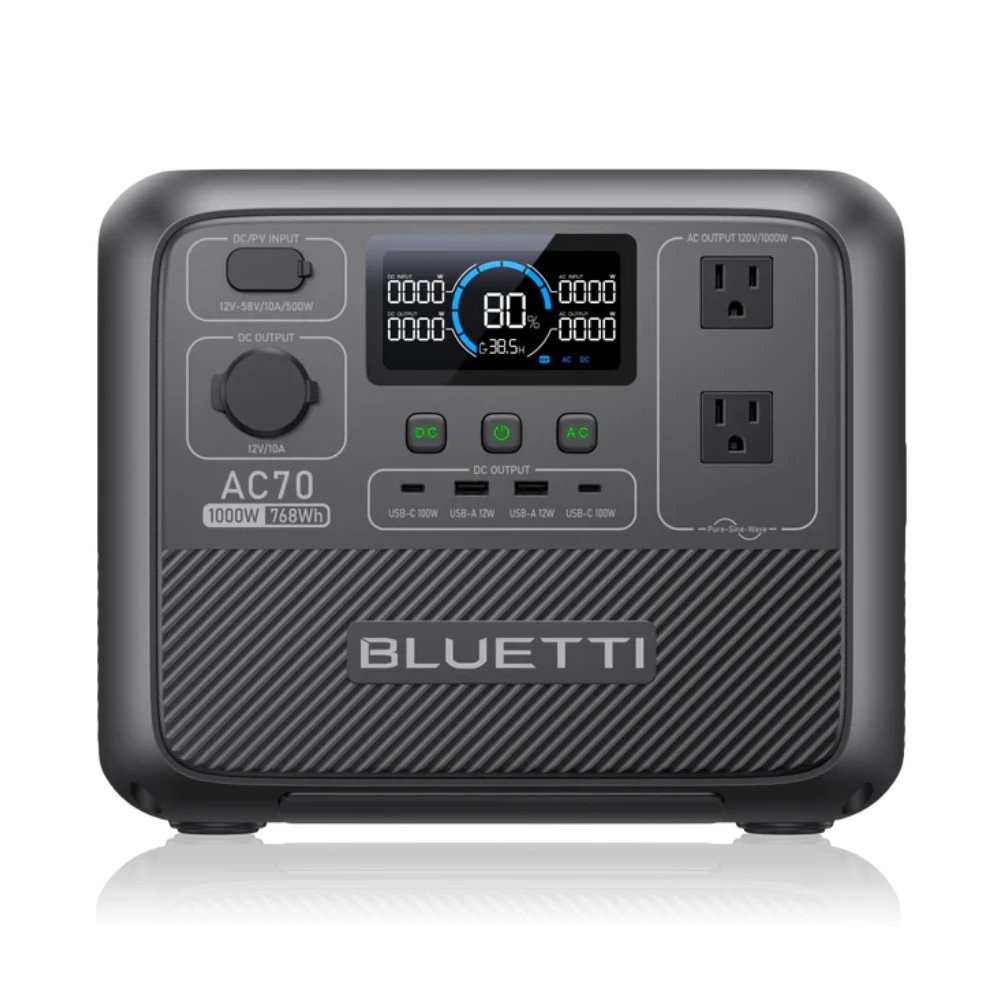
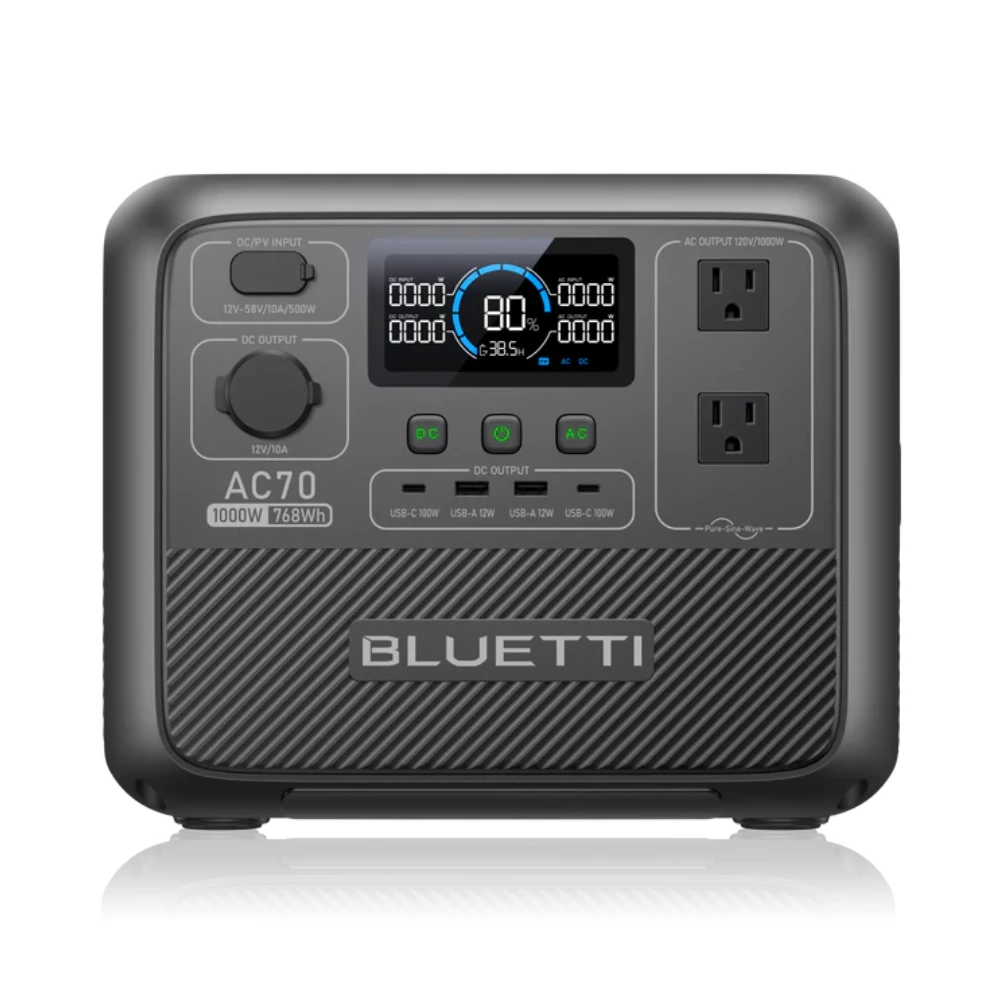
The BLUETTI AC70 is ideal for people who mainly worry about overnight outages or weekend trips. Its 768Wh LiFePO4 battery delivers a long cycle life—important if you’re regularly cycling it with solar power. The 1000W output covers LED lights, modem and router, phones, and small appliances, possibly a compact fridge, depending on its draw.
Pair the AC70 with a 200W panel, and you can keep communication running and power work-from-home essentials through most outages. It’s small enough to move to whichever room you’re using, so long extension cords aren’t needed.
View current pricing and detailed specs on the official BLUETTI siteBLUETTI EB3A Portable Power Station
| Spec | Detail |
|---|---|
| Battery Capacity | 268Wh |
| Battery Type | LiFePO4 |
| AC Output | 600W |
| Solar Input | Suitable for small panels |
| Weight | Lightweight and compact |
| Best Use Case | Go-bags, lights, phones |
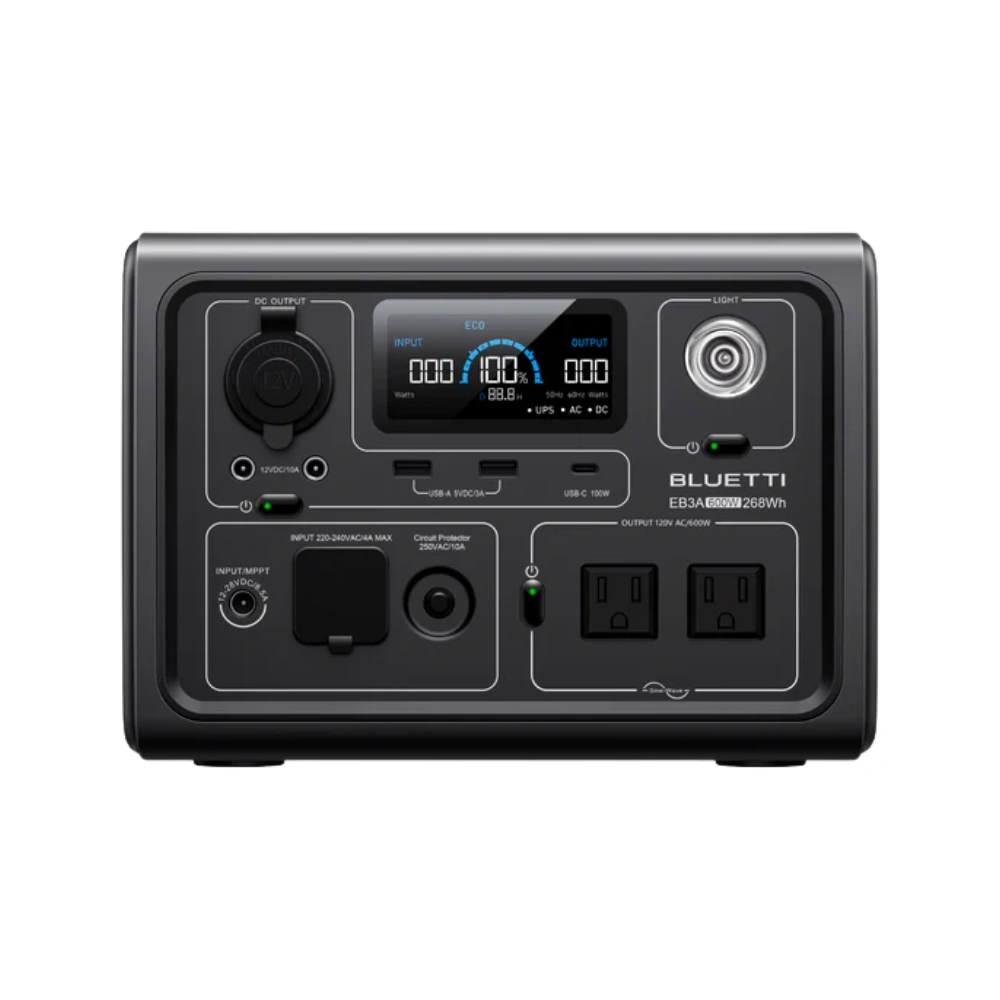
The BLUETTI EB3A is built for minimalist survival setups—stay connected and keep lights on without running big appliances. With 268Wh LiFePO4 and a 600W output, it comfortably handles phones, headlamps, fans, routers, and USB gadgets.
It shines as a dedicated emergency communication and lighting hub. Toss it in a backpack with a compact solar panel for a very portable backup with safe, long-life battery chemistry. Ideal as a second unit alongside a larger station, or as a primary for apartment dwellers who want core basics covered.
See the latest details and availability on the official BLUETTI websiteALLPOWERS R600 Portable Power Station
| Spec | Detail |
|---|---|
| Battery Capacity | 299Wh |
| Battery Type | High-density lithium |
| AC Output | 600W |
| Solar Input | Compatible with 200W class |
| Weight | Ultra-compact design |
| Best Use Case | Camping and emergency travel |
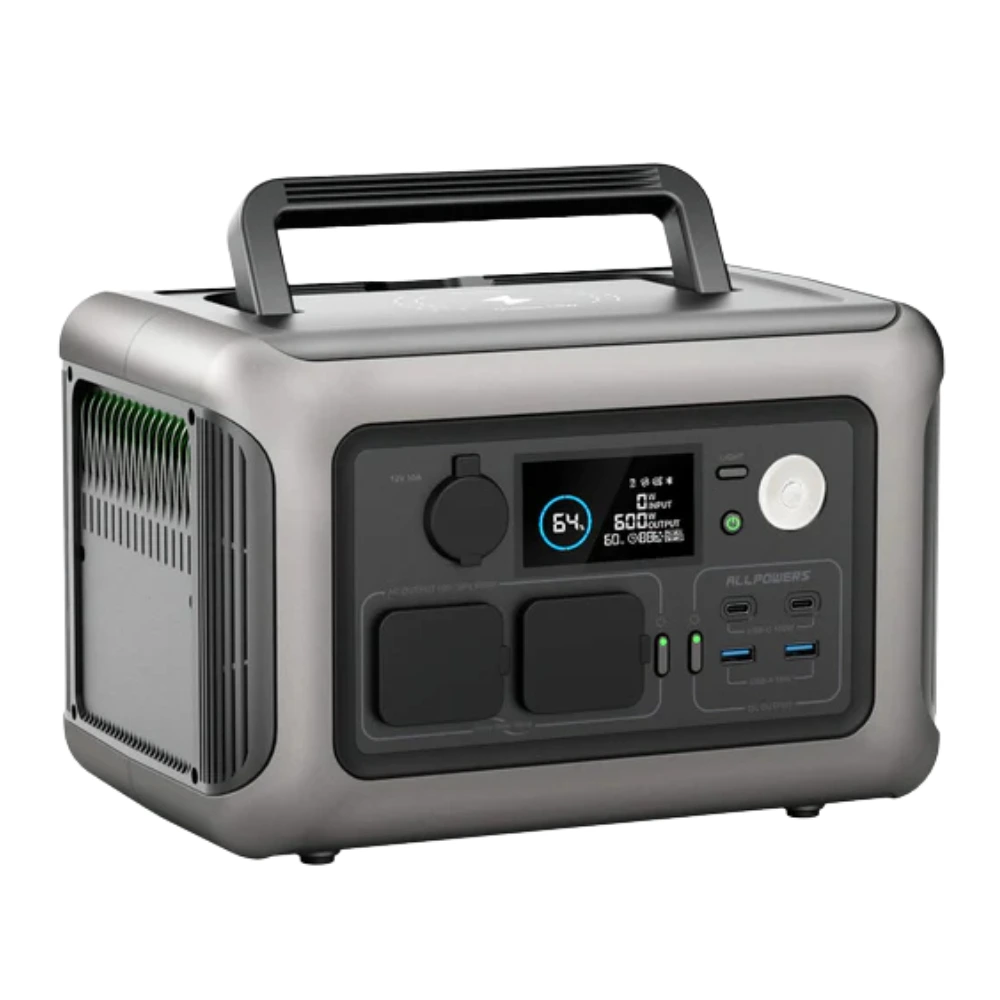
The ALLPOWERS R600 is built for campers and travelers. At 299Wh with 600W output, it covers the same basic loads as the EB3A—lights, phones, small electronics, possibly a small DC fridge or router—but its ultra-compact form makes it easy to stash in vehicles. Think of it as a flexible cube you keep in the car, with a foldable panel for roadside emergencies or spur-of-the-moment camping.
A smart pick for frequent travelers, people in evacuation-prone areas, or anyone wanting a lightweight station dedicated to vehicle use, separate from the main home system.
Check real-time pricing and specs on the official ALLPOWERS siteALLPOWERS S200 Portable Power Station
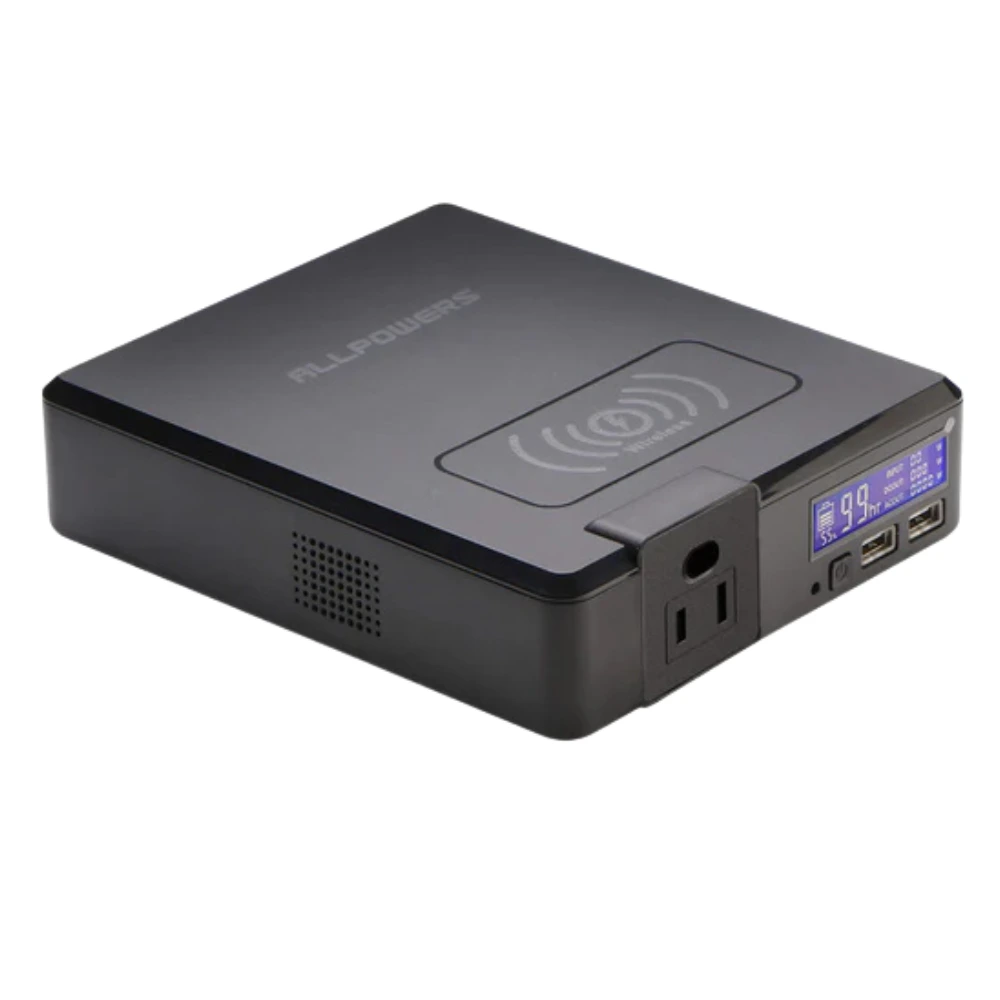
| Spec | Detail |
|---|---|
| Battery Capacity | 154Wh |
| Battery Type | Ternary lithium battery |
| AC Output | 200W |
| Solar Input | 99W maximum |
| Weight | Ultra-compact, very lightweight |
| Best Use Case | Ultra-light go-bags, EDC |
The ALLPOWERS S200 is as minimalist as it gets while still being a real power station. With 154Wh and 200W output, it keeps phones, flashlights, radios, and small devices running through a nighttime outage or on a hike. Its real selling point: you can throw it into almost any bag without a single thought.
Use the S200 as a “layered redundancy” piece—keep a larger station, like the DELTA 3 or AC70, as your main hub, and stash the S200 in your car, office drawer, or go-bag so dead phones aren’t a problem when a blackout hits away from home.
View the latest price and product details on the official ALLPOWERS websiteBest Portable Solar Panels for Emergency Kits
A power station without solar is essentially a large rechargeable battery—useful for short outages, but in a true extended emergency, you’ll want a renewable recharging option. Portable solar panels convert your setup into a true solar power kit for power outages: quiet, scalable, and fuel-free. According to the U.S. Department of Energy, solar panels generate electricity using photovoltaic cells that convert sunlight directly into usable power.
👉 You can read the full explanation here: https://www.energy.gov/eere/solar/how-does-solar-work
The panels below pair well with the generators above and handle outdoor use, regular folding/unfolding, and real-world use.
EcoFlow NextGen 220W Bifacial Portable Solar Panel
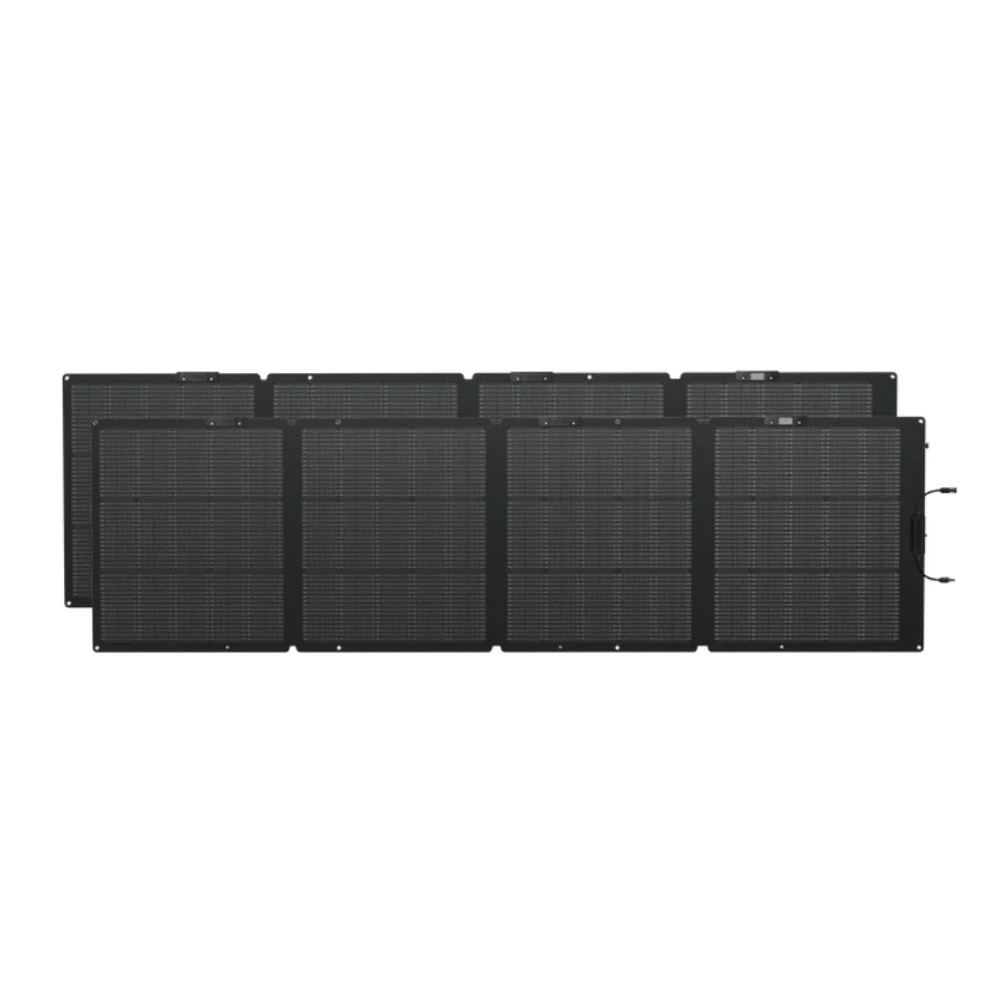
| Spec | Detail |
|---|---|
| Wattage | 220W |
| Panel Type | Bifacial |
| Conversion Rate | Up to 25% |
| Durability | IP68 waterproof rating |
| Weight | Portable, foldable |
| Best Use Case | Fast charging, rough conditions |
EcoFlow’s NextGen 220W bifacial panel is designed to pull maximum energy from a sunny day. Its bifacial design captures light from front and rear surfaces—especially useful in reflective environments like snow or light-coloured ground. The IP68 waterproof rating means it survives rain and dust during real-world emergencies, not just fair-weather camping. Paired with the DELTA 3 or AC70, it becomes the backbone of an off grid solar survival kit that meaningfully recharges your station each day.
Explore full specifications and current pricing on the official EcoFlow siteBLUETTI 200W Solar Panel
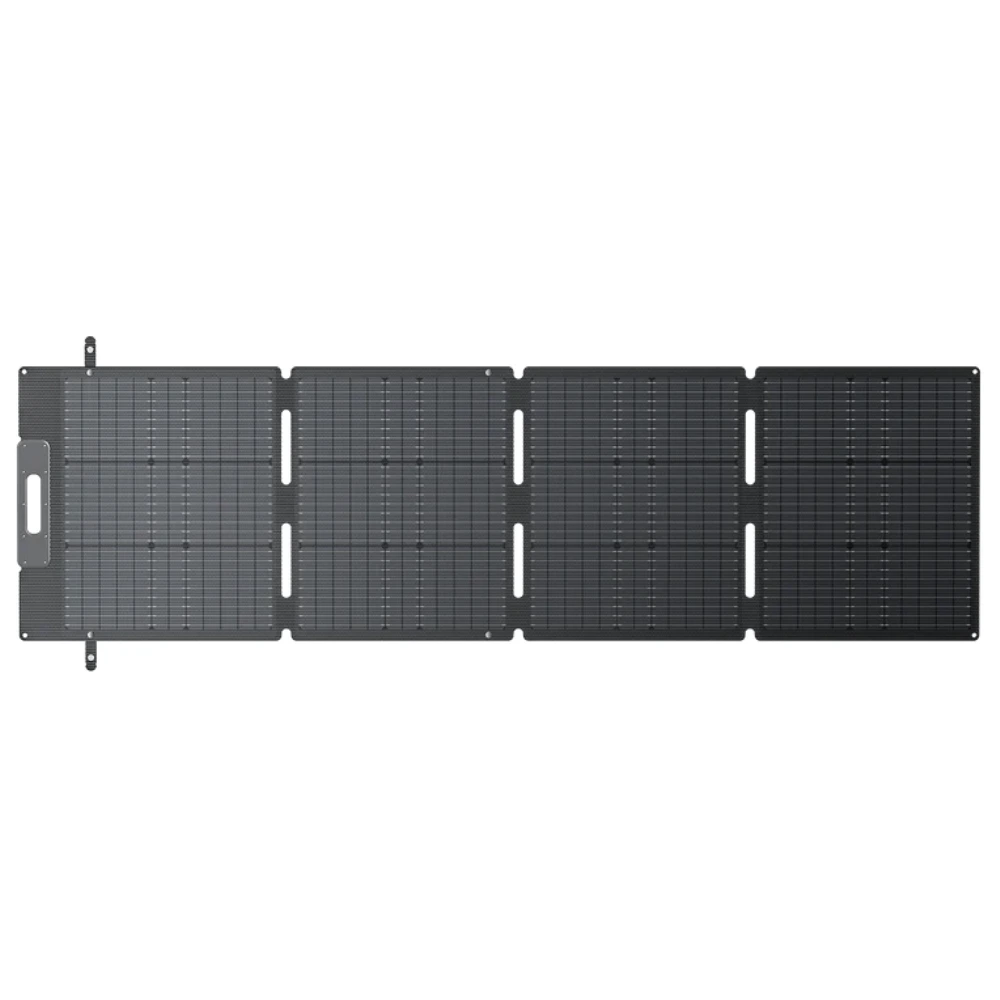
| Spec | Detail |
|---|---|
| Wattage | 200W |
| Panel Type | Foldable, portable |
| Conversion Rate | 23.4% |
| Durability | Outdoor-ready |
| Weight | Designed for field portability |
| Best Use Case | Regular emergency recharging |
BLUETTI’s 200W foldable panel hits the sweet spot between output and portability. At 23.4% efficiency, a few solid hours of sun can refill what you used overnight for lights, router, and phone charging. Fold it up, and it doesn’t take over your boot space. This is where most people should start when building a home-based solar power kit for outages—one panel now, add a second later if you need more.
Check the latest specs and availability on the official BLUETTI websiteALLPOWERS SP033 200W Solar Panel
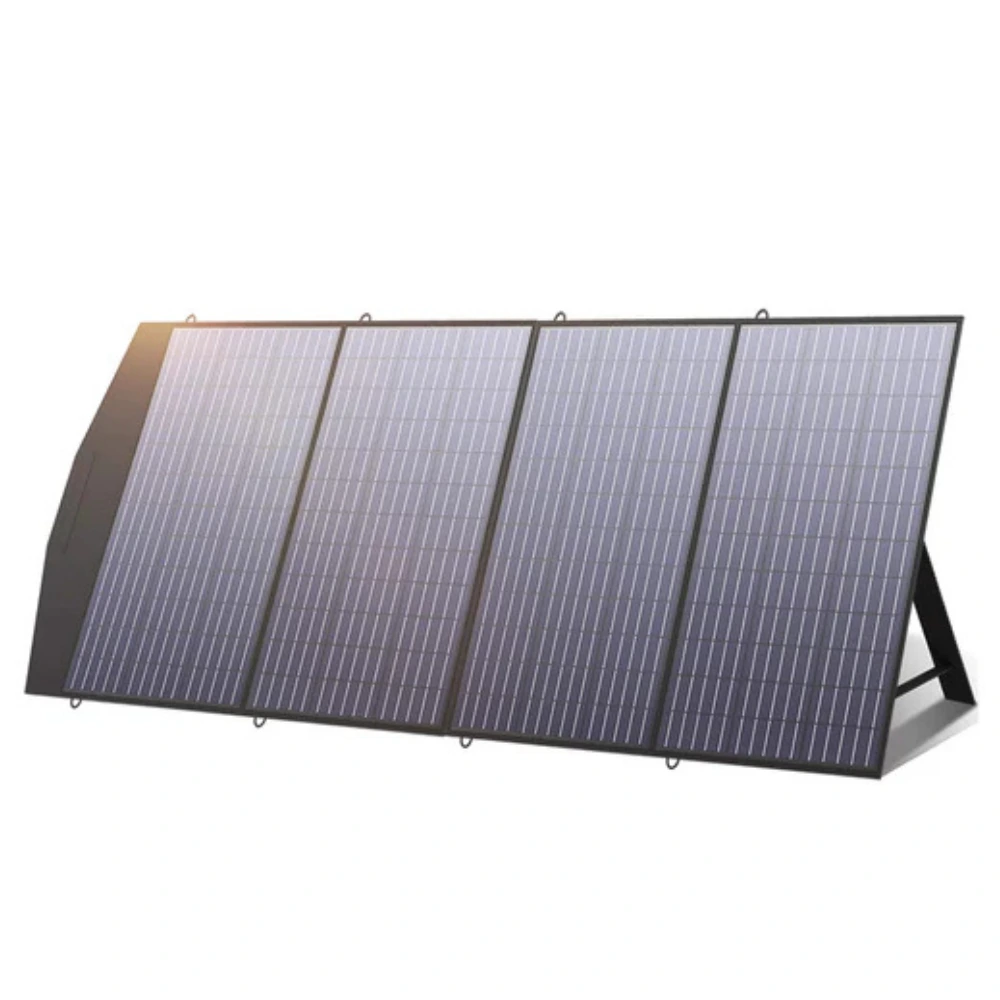
| Spec | Detail |
|---|---|
| Wattage | 200W |
| Panel Type | Foldable, bundled for easy carry |
| Conversion Rate | Up to 25% |
| Durability | Outdoor-ready |
| Weight | Designed for quick deployment |
| Best Use Case | Camping, vehicle-based survival kits |
The ALLPOWERS SP033 is built for easy transport and quick setup, folding into a compact bundle that’s simple to store in a car or RV. Pop it open, angle it towards the sun, and you’re producing power within minutes. It pairs naturally with ALLPOWERS stations like the R600 or S200, though it works with any station supporting compatible solar input. If your emergency plan leans on vehicle evacuation or camping, this panel earns its keep fast.
See current pricing and product details on the official ALLPOWERS siteHow to Build an Off Grid Solar Survival Kit
Here’s a straightforward way to build an off grid solar survival kit without overthinking it:
- Pick your main portable power station.
- Apartment / basic needs: BLUETTI EB3A or ALLPOWERS R600.
- Family home/fridge and router: EcoFlow DELTA 3 or BLUETTI AC70.
- Add one foldable solar panel. Aim for at least 200W. Make sure the connectors and voltage match your station (usually MC4 with an adapter in the box).
- Include the right charging cables. Keep the AC charger, car cable, and solar cable in the same bag or crate. Label them if you have multiple stations.
- Add emergency lights and small essentials. LED lanterns, headlamps, and USB lights give far more runtime per watt-hour than old-school bulbs. Include a power bank, USB fan, and any critical medical devices.
- Store it as a grab-and-go kit. Keep your station charged and panel folded beside it. Do a quarterly drill: run it for an evening, recharge with solar, and verify everything works.
For more ideas on where smaller solar gadgets fit into everyday life, check the SolarGizmoGuide’s solar gadgets article.
Portable Solar Kit for Camping and Outdoor Emergencies
A portable solar kit for camping is essentially the same as the one used on nicer days. The same power station and panel that keep the lights on during a blackout at home will run lights, charge phones, and keep a cooler humming at a campsite or remote cabin.
For car camping and RV travel, the BLUETTI AC70 or EcoFlow DELTA 3 with a 200–220W panel is a comfortable setup. Road-trippers or backpack-style campers will prefer lighter units like the EB3A, R600, or S200, where pack size matters more than raw watt-hours.
If you want a deeper look at real-world portable setups, this portable solar power guide explains how to build and size a reliable off-grid system.
Solar Power Kits for Power Outages: What to Expect
Even the best solar power kit for power outages has limits. You’re working with a finite battery and whatever sunlight you get that day.
- Charging time. A 200W panel in decent sun realistically harvests 600–800Wh per day, depending on weather and latitude—great for essentials but not for typical household power use.
- Sunlight limitations. Clouds, shade, and short winter days can dramatically cut production. You still need to ration power in bad weather.
- Device runtime. A 1024Wh station like the DELTA 3 might run a 60W fridge for 12–14 hours on paper, but in practice, you’re sharing that energy with lights, phones, and Wi-Fi.
The smartest mindset: use solar and battery to keep life functional, not luxurious. Focus on cold food, light, connectivity, and medical essentials first. If you expect to run larger appliances during outages, consider exploring a higher-capacity option such as a 2000Wh solar generator.
Frequently Asked Questions
What should a solar survival kit include?
At minimum: a portable power station, at least one compatible foldable solar panel, all charging cables (AC, car, solar), and efficient LED lighting. Add a power bank, headlamps, a compact radio, and any critical medical devices you rely on.
How long can a solar generator run during a blackout?
It depends on battery size and load. A 300Wh-class unit runs lights and phones for a full evening. A 1000Wh unit like the DELTA 3 covers a modest fridge, router, and lights for many hours. Adding solar panels can extend the runtime across multiple days.
Are solar generators better than fuel generators?
For most home users, yes: quiet, safe indoors, no petrol required (which can be hard to find during major disasters). Fuel generators still make sense for very high loads or off-grid workshops, but for most households, solar is simpler, cleaner, and easier to maintain.
How much solar power is needed for emergencies?
For basic emergency use—phones, lights, Wi-Fi, small fridge—200–400W of portable solar is a solid starting point. For multi-day outages or more appliances, add panels and a larger battery bank
Can I leave my solar survival kit plugged in at all times?
Yes—that’s usually the best approach. Most modern stations are designed for standby top-up charging, so they’re always ready when the grid drops. Follow manufacturer guidelines and run occasional test cycles.
Quick Recommendations
Best Lightweight Option
BLUETTI EB3A
- Ideal for apartments and small spaces
- Lightweight and easy to carry anywhere
- Great for phones, lights, and essential devices
Best Overall Power Station
EcoFlow DELTA 3
- Strong balance of capacity and output
- Expandable for long-term backup needs
- Ideal for home outages and essential appliances
Best Budget Micro Unit
ALLPOWERS S200
- Ultra-compact and easy to carry daily
- Simple backup for phones and small devices
- Great for car kits and emergency bags
Pair any of these with a 200–220W portable panel from EcoFlow, BLUETTI, or ALLPOWERS, and you’ve already got a stronger setup than most households have when the lights go out.
Final Verdict
A well-planned solar power survival kit pays for itself the first time the grid fails for more than an hour. You’re not just avoiding spoiled food and dead phones—you’re buying peace of mind and independence from the aging power grid. Unlike fuel generators, solar kits are quiet, clean, and genuinely useful year-round for camping, road trips, and backyard workdays.
Start with one good power station and a matching 200–220W panel, keep it charged, and actually use it so you know exactly what it can handle. You can scale the system later by adding extra batteries or additional solar panels. If you’re curious how smaller solar devices can fit into everyday life, this guide on solar gadgets shows practical examples people already use.
About the Author

SolarGizmoGuide is an independent solar research and publishing platform focused on practical, real-world solar solutions for urban homes and apartments. Our editorial team analyzes solar gadgets, mounting systems, backup power systems, and portable solar technology to help readers make informed investment decisions.
All content is based on independent research, manufacturer technical documentation, and publicly available performance data. Articles are reviewed and updated periodically to reflect current installation standards, safety considerations, and evolving solar technology.