
Last Updated on May 7, 2026 by dhruwuttam58@gmail.com
If your electricity bill has quietly crept up over the last couple of years, you’re not imagining it. And with power cuts, storms, and grid issues occurring more frequently, small solar energy gadgets are starting to make a lot more sense than they used to.
Instead of jumping straight into a full rooftop system, many homeowners now start with practical devices: a portable power station, foldable panels, solar-powered outdoor lights, and a good solar power bank. These provide benefits you can feel in daily life—lower grid use, backup power, and less stress when the lights flicker.
In this guide, I’ll walk you through the solar energy gadgets that actually earn their place in your home or camping kit. We’ll look at the best solar gadgets for home backup, travel, and emergencies, with real-world use cases and mild opinions based on what actually works long term.
This post may contain affiliate links. If you buy through them, I may earn a small commission at no extra cost to you
Table of Contents
Best Solar Gadgets for Home in 2026
Solar technology has advanced significantly. The best solar gadgets for home today aren’t gimmicky garden toys; they’re practical tools that reduce grid dependence and make your life more resilient when things go wrong.
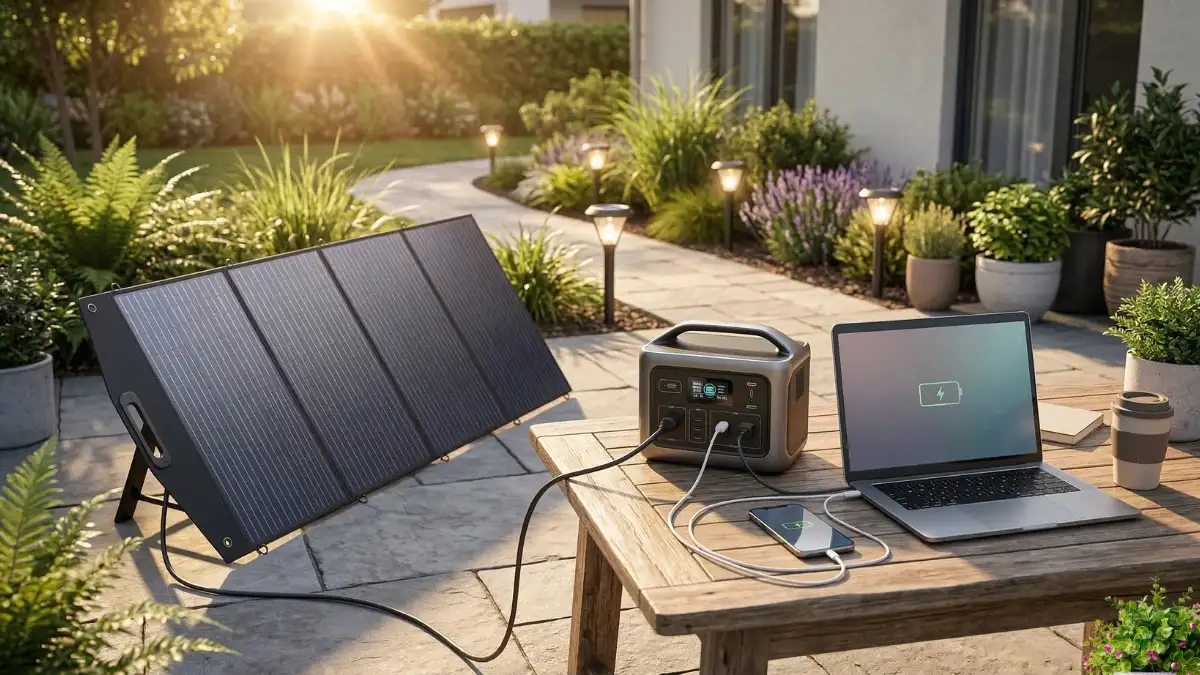
Think of these gadgets as a form of “modular solar.” Instead of one big system on your roof, you build a flexible setup: a portable solar generator, foldable panels, outdoor lights, and a solar power bank or two. Over time, this stack can shave some electricity use, keep essentials running during outages, and make camping or road trips more comfortable.
Portable Solar Generators for Backup Power
Portable solar generators (battery power stations you can charge via solar) are the heart of most modern solar setups at home and on the road. They give you silent, fume-free backup power for:
- Short power cuts at home (lights, Wi‑Fi, phones, a small fridge)
- Camping and RV trips where you still want to charge laptops and cameras
- Light off-grid setups in cabins or remote work spots
Battery chemistry and charging speed matter more than ever now. From practical experience, LiFePO4 models are worth the slightly higher price because they last for thousands of cycles and tolerate daily use better than older lithium-ion designs.
Portable Solar Generator Comparison
| Model | Capacity | Output | Battery | Best Use |
|---|---|---|---|---|
| EcoFlow DELTA 3 | 1024 Wh | 1800 W | LiFePO4 | Home backup, camping |
| Bluetti AC180 | 1152 Wh | 1800 W | LiFePO4 | RV and longer trips |
| ALLPOWERS R1500 | 1152 Wh | 1800 W | LiFePO4 | Budget backup |
Quick Recommendation
Best Overall Portable Solar Generator: EcoFlow DELTA 3
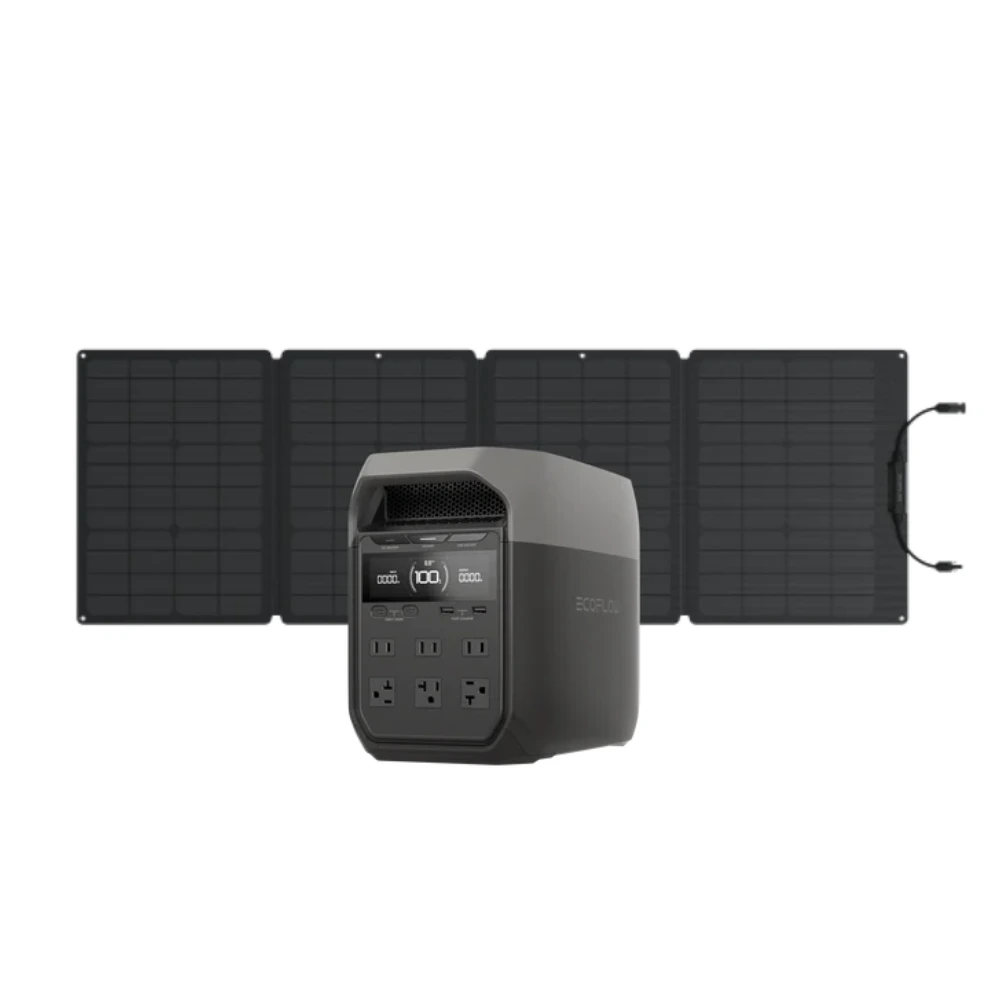
If you want one solar generator that balances portability, power, and reliability, the EcoFlow DELTA 3 is hard to beat. With a 1024 Wh LiFePO4 battery, fast AC charging, and strong 1800W output, it handles most home backup needs while still being easy to move around the house or take on camping trips. Pairing it with foldable solar panels also makes it a flexible off-grid power solution for emergencies and outdoor use.
EcoFlow DELTA 3 Portable Power Station
⚡ Quick Specifications – EcoFlow DELTA 3
| Spec | Detail |
|---|---|
| Battery Capacity | 1024 Wh |
| Battery Type | LiFePO4 (LFP) |
| AC Output | 1800 W (surge up to 3600 W) |
| Solar Input | Up to ~500W MPPT |
| Weight | Around 12.5 kg |
| Charging Time | 0–100% in ~50 min via AC |
| Best Use Cases | Home backup, camping, RV travel |
The EcoFlow DELTA 3 Portable Power Station is a powerful yet portable solar generator designed for home backup, camping, and off-grid power. It features a 1024 Wh LiFePO4 battery and 1800 W AC output, allowing it to run everyday devices such as laptops, routers, TVs, mini-fridges, and small power tools. One of its biggest advantages is EcoFlow’s X-Stream fast charging technology, which can recharge the unit from empty to full in about 56 minutes using AC power.
For outdoor or emergency setups, the DELTA 3 also supports solar input up to 500 W, making it easy to recharge the battery with portable solar panels during the day. Despite its strong performance, it remains fairly portable at around 12.5 kg, making it practical for both home use and travel. With a durable LiFePO4 battery designed for thousands of cycles, the DELTA 3 is built for long-term reliability.
Check the latest price and full specifications on the official EcoFlow website.
For a deeper dive into how a unit like this fits into a whole-home backup strategy, it’s worth pairing this with a dedicated setup, as in our solar generator for home backup guide.
Bluetti AC180 Portable Power Station
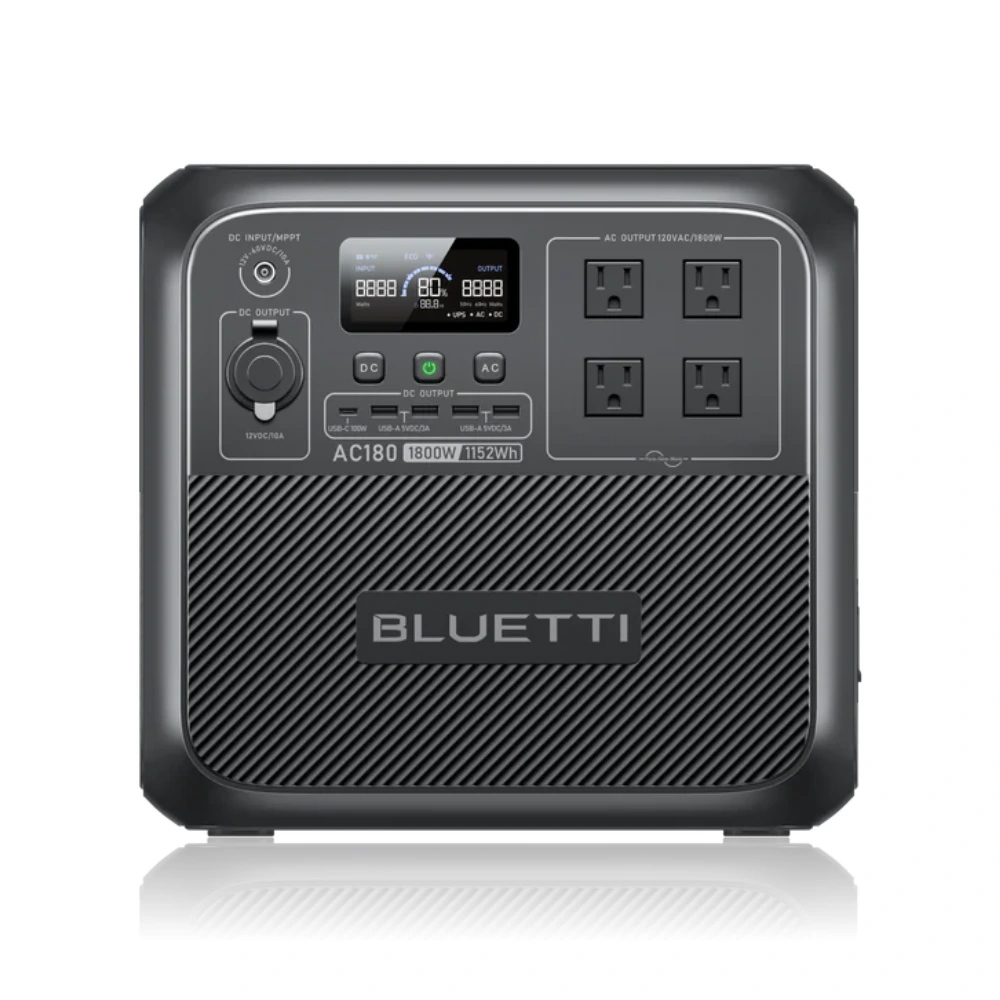
⚡ Quick Specifications – Bluetti AC180
| Spec | Detail |
|---|---|
| Battery Capacity | 1152 Wh |
| Battery Type | LiFePO4 |
| AC Output | 1800 W (2700 W Power Lifting Mode) |
| Solar Input | Up to 500 W, 12–60 V, 10 A MPPT |
| Weight | 17 kg (37 lbs) |
| Charging Time | ~1.3–1.8 hours AC Turbo Charge |
| Best Use Cases | Home backup, RVs, longer camping trips |
If you want something slightly beefier with very solid LiFePO4 cells, the Bluetti AC180 is another strong pick. It offers similar output power to the DELTA 2 but with a bit more usable capacity, making it better if you regularly run heavier loads or want longer runtime on a single charge.
In day-to-day use, the AC180 shines when you’re powering mixed loads—say, a small fridge, some LED lights, a laptop, and phone chargers—especially on camping trips or in a small cabin. The “power lifting” mode can briefly handle higher-wattage resistive loads, which is useful for things like kettles, but I’d still avoid pushing it to the limit regularly.
View current pricing and detailed specs directly on the official BLUETTI website.
ALLPOWERS R1500 Portable Power Station
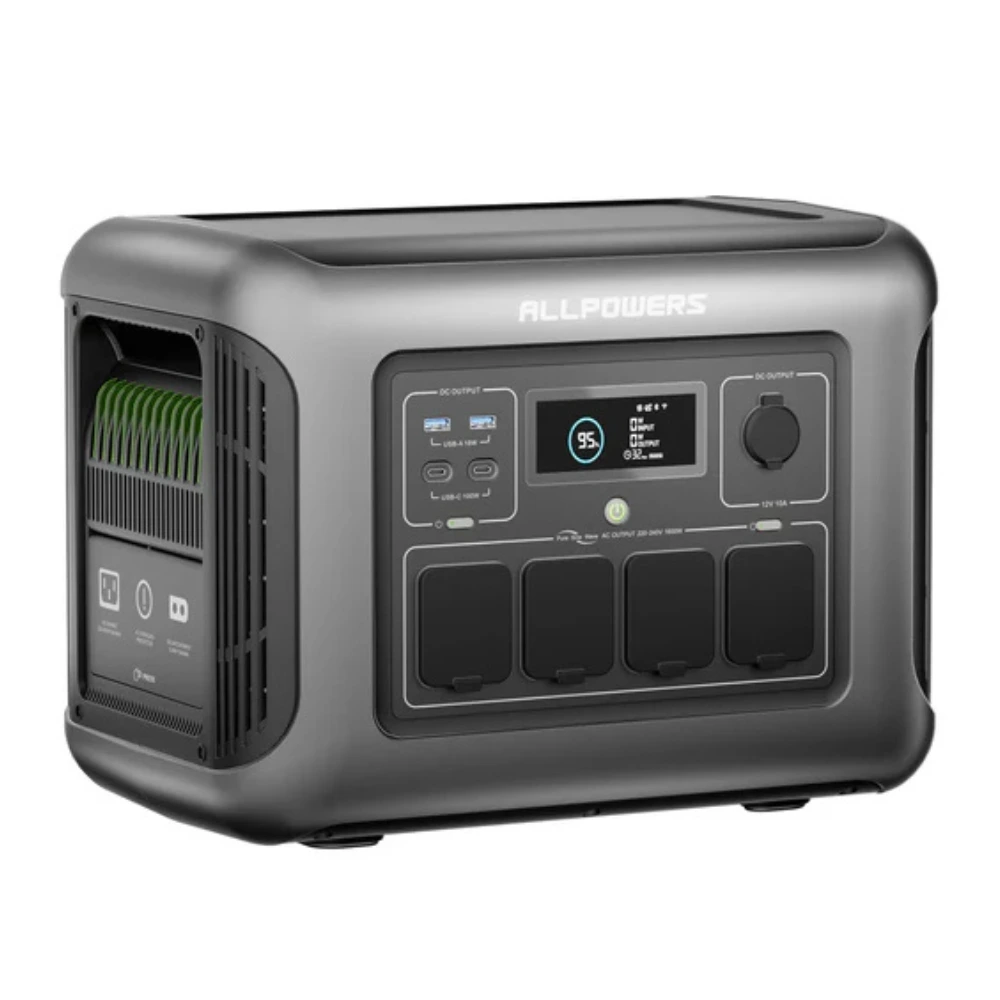
⚡ Quick Specifications – ALLPOWERS R1500
| Spec | Detail |
|---|---|
| Battery Capacity | 1152 Wh |
| Battery Type | LiFePO4 (3500+ cycles) |
| AC Output | 1800 W (3000 W surge) |
| Solar Input | Up to 500–650 W (model dependent) MPPT |
| Weight | Around 17–18 kg (varies by region) |
| Charging Time | 0–80% in ~45 min via AC (up to 1500 W) |
| Best Use Cases | Home backup, off-grid cabins, device-heavy setups |
The ALLPOWERS R1500 tends to undercut the “big names” on price while still offering a solid LiFePO4 battery and high output. It’s a good fit if you’re trying to maximise watt-hours per rupee or dollar. With 1800 W output and a decent 1152 Wh battery, it can comfortably run most household essentials during a short outage.
Where it stands out is the number of ports and expansion options. You get multiple AC outlets, fast USB-C ports, wireless charging pads, and the option to expand capacity with extra batteries. For off-grid cabins, small home offices, or multi-device families, that connectivity makes a difference—you spend less time juggling plugs.
Explore the latest deals and technical details on the official ALLPOWERS website.
Foldable Solar Panels for Camping
Portable power stations are only half the setup. Without a way to recharge them off-grid, they’re just large batteries. That’s where foldable solar panels for camping become essential. These panels are designed to be portable, easy to deploy, and powerful enough to recharge solar generators during outdoor trips or power outages.
Most campers and RV travellers use foldable panels to recharge power stations during the day, allowing them to start the evening with a full battery. In good sunlight, a 200–220W panel can recharge a mid-size power station in roughly 4–8 hours, depending on sunlight conditions.
EcoFlow 220W Bifacial Portable Solar Panel
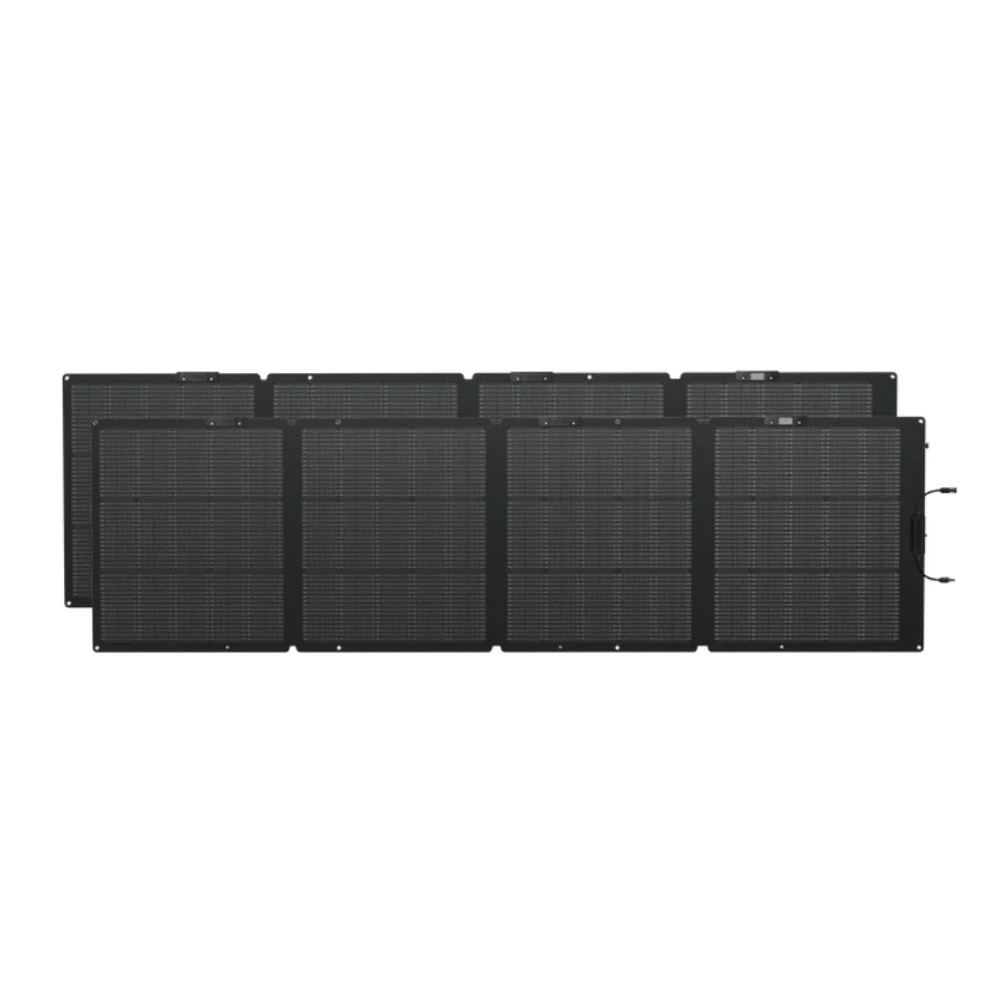
⚡ Quick Specifications – EcoFlow 220W Bifacial Panel
| Spec | Detail |
|---|---|
| Power Rating | 220 W (front), up to ~155 W rear gain |
| Type | Bifacial monocrystalline |
| Connector | Standard solar connectors (MC4-type) |
| Weight | ~9–10 kg including case |
| Best Use Cases | Camping, home backup charging, RV use |
EcoFlow’s 220W bifacial panel is designed to capture sunlight from both the front and rear surfaces, allowing it to generate extra power from reflected light. This design can improve real-world energy production compared with standard panels, especially when placed on bright surfaces like sand or concrete.
The foldable case doubles as an adjustable stand, making it easy to angle the panel toward the sun. It pairs naturally with EcoFlow DELTA and RIVER series power stations and works well for camping, RV trips, or home backup charging.
See full specifications and availability on the official EcoFlow website.
Bluetti 200W Foldable Solar Panel
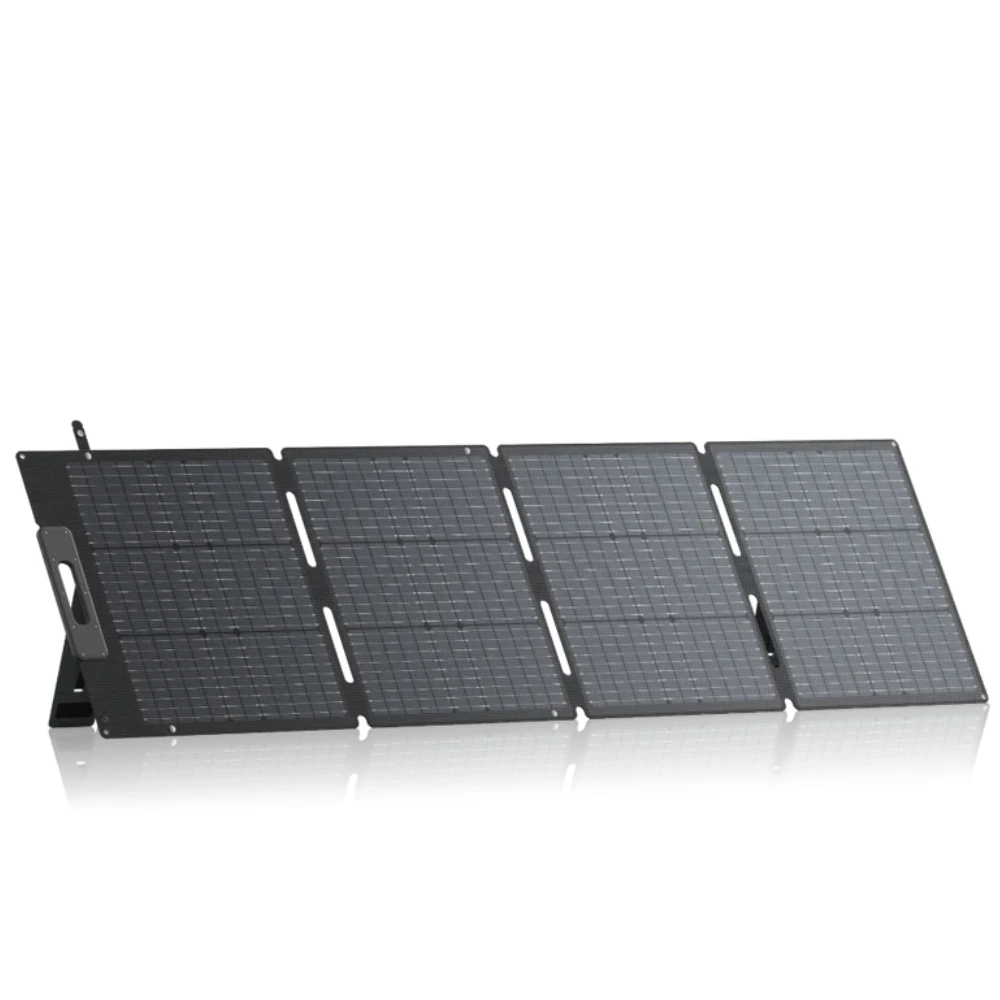
⚡ Quick Specifications – Bluetti 200W
| Spec | Detail |
|---|---|
| Power Rating | 200 W |
| Type | Monocrystalline foldable panel |
| Connector | MC4-style to Bluetti cable |
| Weight | ~7–8 kg |
| Best Use Cases | Camping, van life, RV, home backup |
The Bluetti 200W foldable solar panel is durable and designed for reliable outdoor use. Its suitcase-style folding design makes it easy to transport, while built-in kickstands help angle the panel for better sunlight exposure.
In real-world use, it works well with power stations like the Bluetti AC180 for camping or emergency backup setups. While actual output depends on sunlight conditions, a single panel can generate enough power during a sunny day to recharge smaller power stations.
Check current pricing and product details on the official BLUETTI website.
ALLPOWERS 200W Foldable Solar Panel
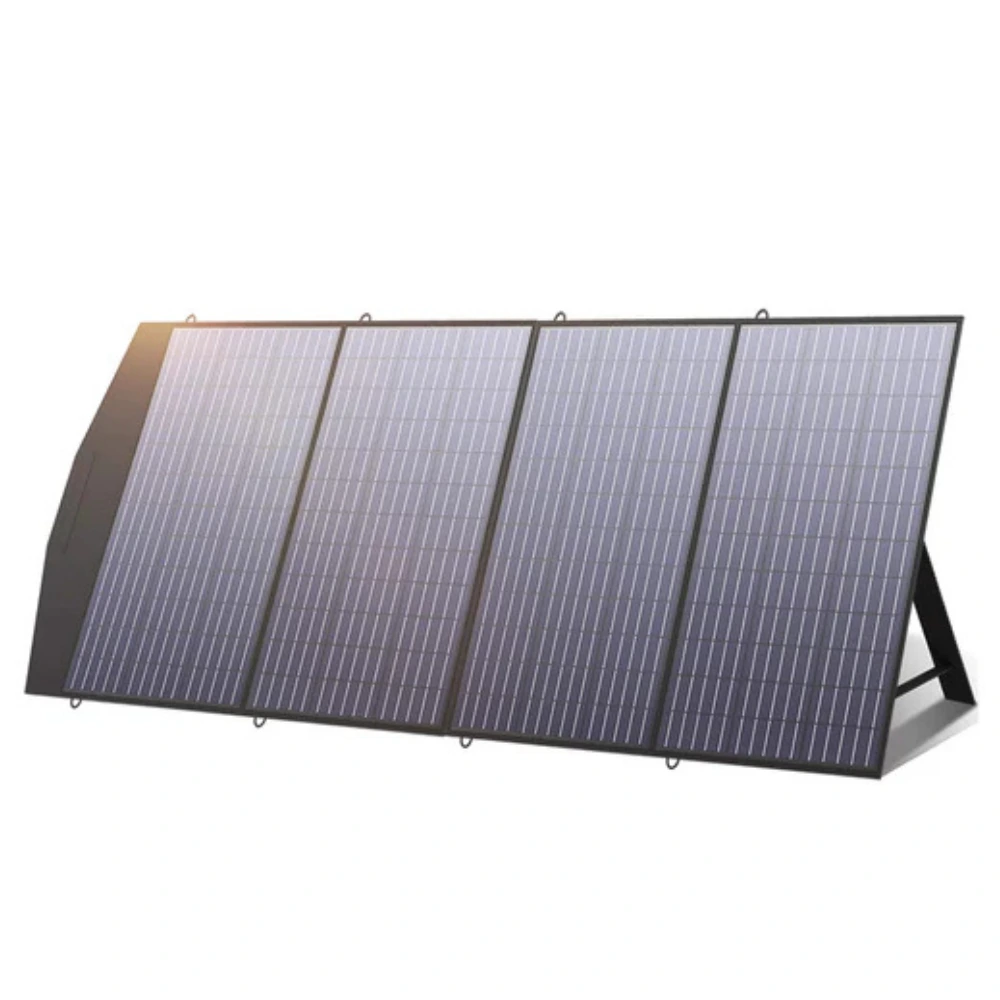
⚡ Quick Specifications – ALLPOWERS 200W Panel
| Spec | Detail |
|---|---|
| Power Rating | 200 W |
| Type | Foldable monocrystalline |
| Connector | Multi-connector kit / MC4 |
| Weight | Typically ~6–8 kg |
| Best Use Cases | Budget camping setups, RV, backup charging |
ALLPOWERS’ 200 W foldable panel is one of the more budget-friendly high-wattage panels, making it attractive if you’re putting together a cost-conscious setup. It’s compatible with many power station brands, thanks to adapter cables and standard connectors.
Pairing it with the R1500 or another mid-range station, you can create a very capable portable system. Be realistic about the limitations of a single panel; for heavier loads or cloudy climates, two panels make life easier.
View the latest specifications and offers on the official ALLPOWERS website.
For more details on choosing wattage and panel types, go through our portable solar power guide.
Solar Powered Outdoor Lights for Gardens and Pathways
Solar-powered outdoor lights are the easiest “entry-level” solar energy gadgets you can install. No wiring, no electrician, and no worrying about leaving lights on all night because they charge during the day. They’re great for:
- Garden and pathway lighting
- Basic security around entrances
- Making outdoor areas usable in the evening without extra energy costs
Because each light has its own tiny panel and battery, they won’t match a wired floodlight—but for ambient light and guiding the way, they do the job surprisingly well.
GIGALUMI Solar Pathway Lights
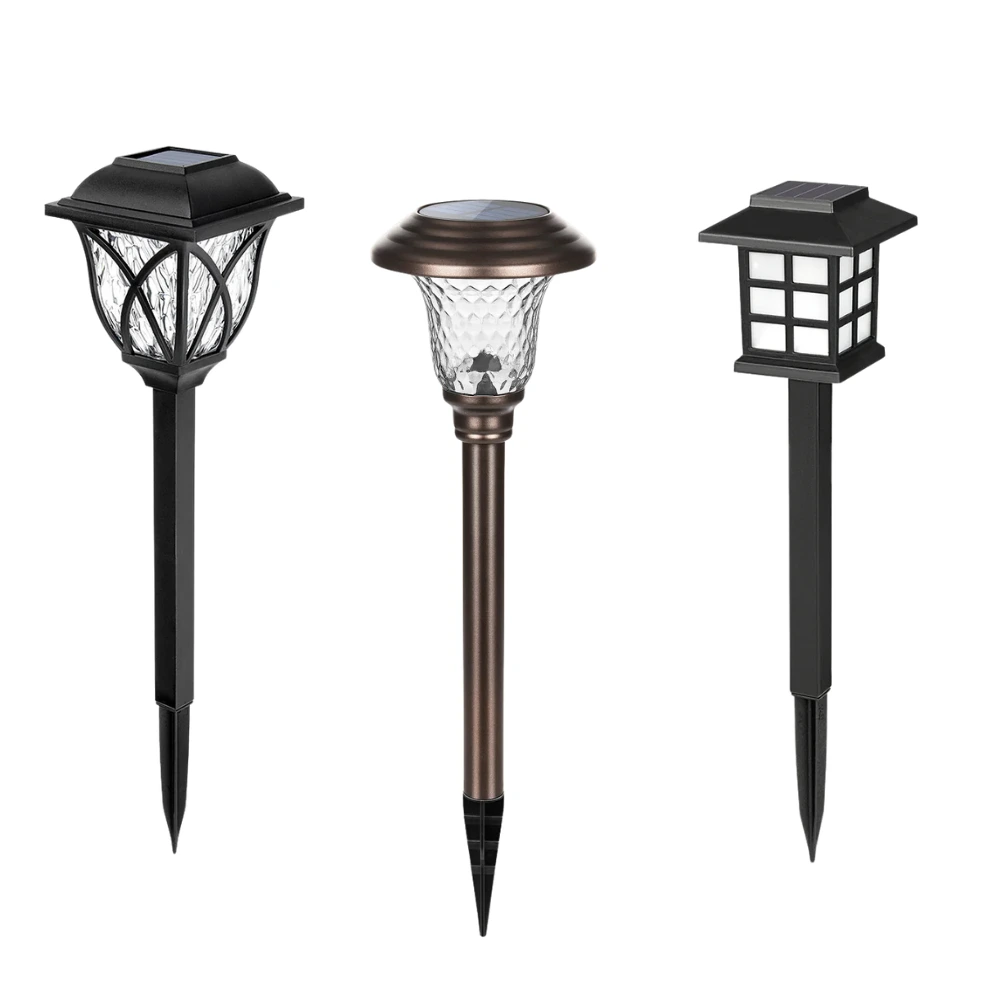
⚡ Quick Specifications – GIGALUMI Solar Pathway Lights
| Spec | Detail |
|---|---|
| Power Source | Built-in small solar panel |
| Battery Type | Small rechargeable battery |
| Runtime | Typically 6–8 hours after full sun |
| Installation | Ground stakes, no wiring |
| Best Use Cases | Pathways, driveways, garden edging |
GIGALUMI’s solar pathway lights are the classic set-and-forget option: stake them into the ground along your walkway, and they handle the rest. They turn on automatically at dusk, add a nice visual upgrade to paths or driveways, and don’t add a single unit to your electricity bill.
They’re best for marking paths and creating gentle illumination rather than blasting bright security light. If you have very shaded areas, performance will drop, so they’re happiest in spots that get several hours of direct sun.
Explore design options and current availability on the official GIGALUMI website.
GIGALUMI Solar Garden Stake Lights
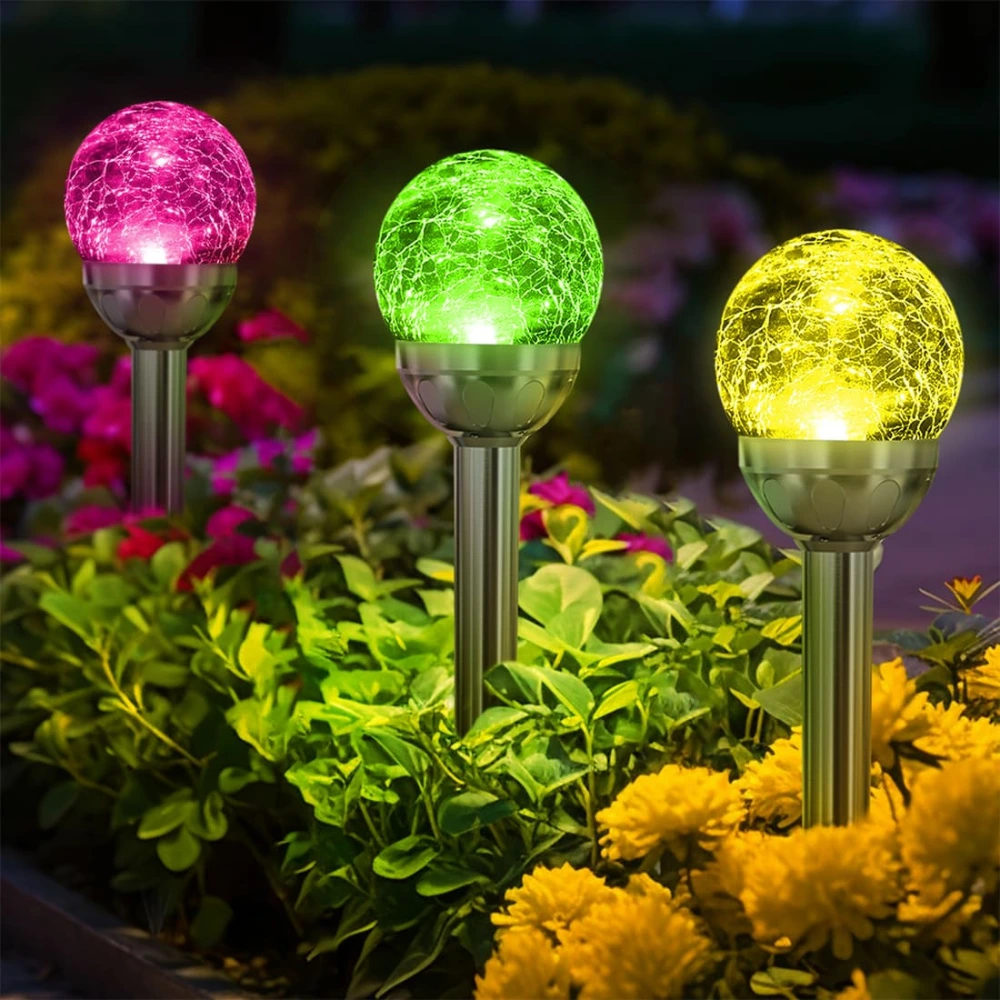
⚡ Quick Specifications – GIGALUMI Solar Garden Stake Lights
| Spec | Detail |
|---|---|
| Power Source | Integrated mini solar panel |
| Battery Type | Small rechargeable battery |
| Runtime | Around 6–8 hours in good sun |
| Installation | Garden stakes, plug-and-play |
| Best Use Cases | Decorative garden and balcony lighting |
These are more decorative than functional, but they still serve a useful purpose in gardens or balconies. You get colourful or warm-white designs that light up automatically at night, ideal for adding charm to outdoor spaces without cables.
You won’t rely on them for “serious” lighting, but they are a nice complement to brighter security lights. As with all small solar garden lights, occasional cleaning of the panels and checking the stakes after heavy rain or wind helps keep them working well.
See the latest decorative lighting options on the official GIGALUMI website.
If your focus is specifically on indoor and outdoor lighting options, go through our solar emergency light pick guide.
Solar Camping Power Stations
Not everyone needs a big power station. If you mainly want to charge phones, cameras, laptops, and a small cooler on short trips, a compact solar camping power station is often a better fit. It’s lighter, cheaper, and easier to move around the campsite.
EcoFlow RIVER 2 Pro
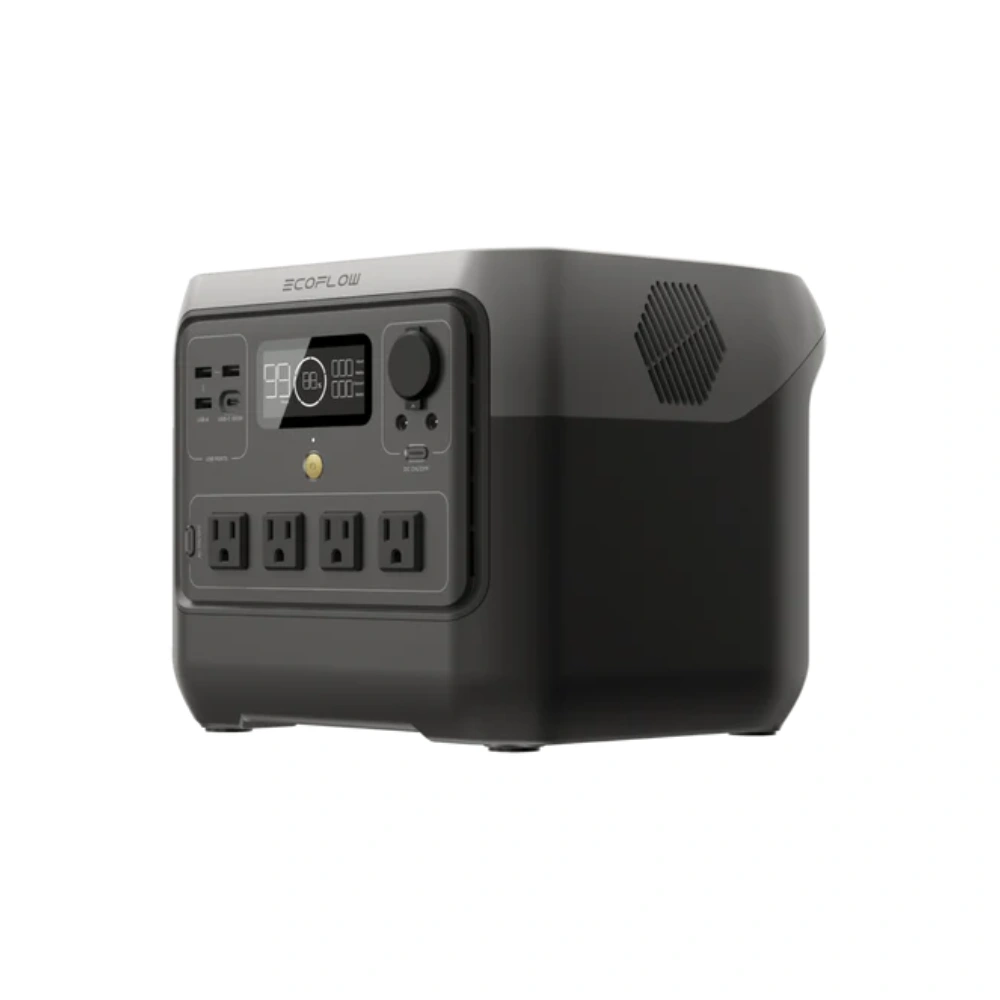
⚡ Quick Specifications – EcoFlow RIVER 2 Pro
| Spec | Detail |
|---|---|
| Battery Capacity | Around 768 Wh |
| Battery Type | LiFePO4 |
| AC Output | Up to ~800 W (X-Boost higher) |
| Solar Input | Typically 220–300 W MPPT |
| Weight | Light, easy to carry (under 8 kg) |
| Best Use Cases | Camping, short outages, road trips |
The EcoFlow RIVER 2 Pro is built for portability while still offering enough capacity to power essential devices during a weekend trip or short power outage. With its LiFePO4 battery and fast AC charging, it can be topped up quickly before heading out.
When paired with a 200W foldable solar panel, the RIVER 2 Pro becomes a flexible off-grid power solution for camping, road trips, or small backup setups at home.
Check the latest specifications and bundle options on the official EcoFlow website.
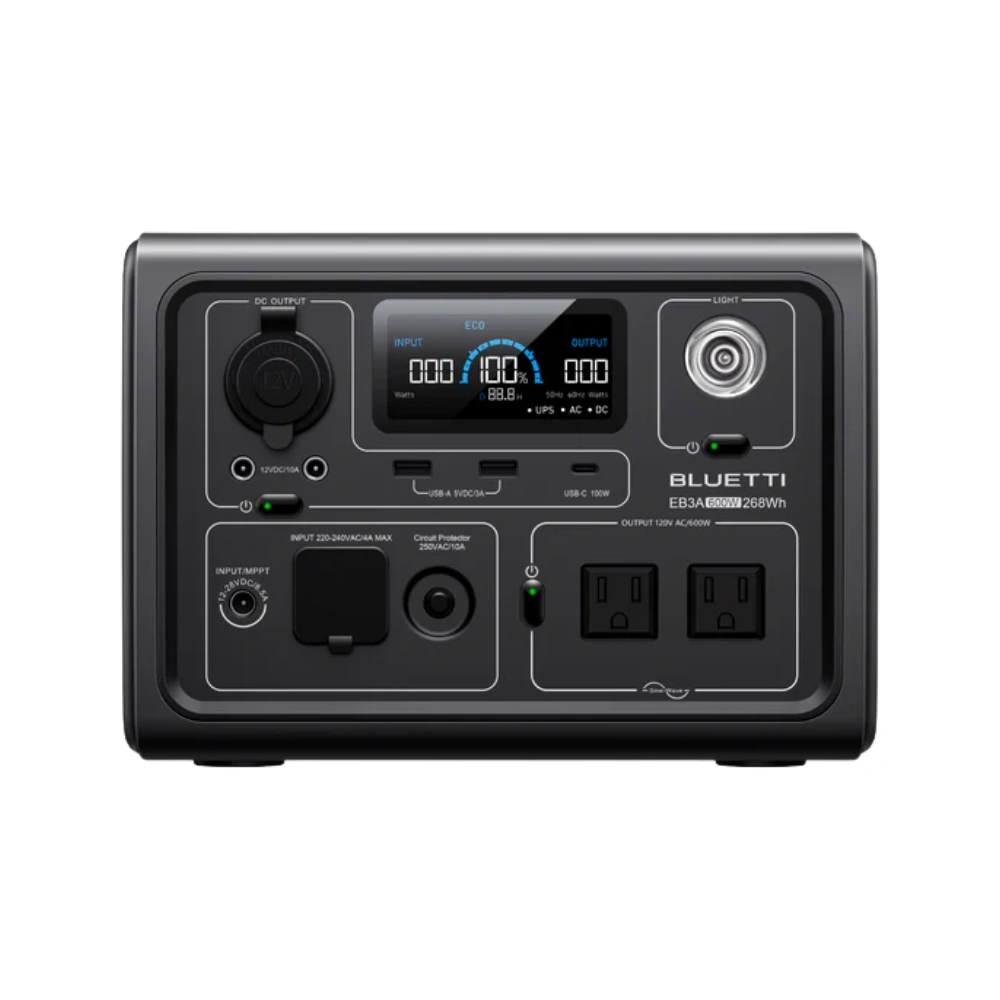
Bluetti EB3A
⚡ Quick Specifications – Bluetti EB3A
| Spec | Detail |
|---|---|
| Battery Capacity | Around 268–300 Wh |
| Battery Type | LiFePO4 |
| AC Output | ~600 W peak (region dependent) |
| Solar Input | Up to ~200 W |
| Weight | Very portable, under 6 kg |
| Best Use Cases | Ultralight camping, desk backup, emergency kits |
The Bluetti EB3A is one of the most compact portable power stations available. While it isn’t designed to run large appliances, it’s ideal for charging phones, tablets, lights, and small electronics.
Its lightweight design makes it popular with campers and vanlife travellers who want a small backup system that doesn’t take up much space. Combined with a portable solar panel, it can provide reliable power for basic outdoor needs.
View full product details and current pricing on the official BLUETTI website.
Want to build a full camping-focused setup? Read our portable solar power guide.
Solar Power Banks for Phones and Gadgets
A good solar power bank is the kind of gadget you forget about until the day you really need it—then you’re very glad it’s in your backpack. It won’t replace wall charging, but the solar panel can slowly top it up when you’re outdoors.
The solar panel on a power bank acts mainly as a slow trickle charger. The main value comes from capacity, durability, and extra features like wireless charging and multiple outputs. They’re ideal for keeping phones and GPS devices charged on hikes, in emergency kits, and for everyday carry for commuters and travellers.
If you want to go deeper into picking the right size, ports, and wireless charging features, explore our dedicated solar power bank guide.
Benefits of Using Solar Energy Gadgets
Modern solar energy gadgets provide several practical advantages for homeowners and outdoor users.
- Lower electricity costs: Devices like solar garden lights and portable chargers reduce reliance on grid electricity.
- Emergency preparedness: Portable power stations can keep essential devices running during outages.
- Clean renewable energy: Solar power generates electricity without emissions.
- Off-grid flexibility: Solar gadgets allow you to power devices anywhere sunlight is available.
The U.S. Department of Energy and the International Energy Agency both highlight how small-scale solar and storage are becoming increasingly important parts of the energy system, not just big solar farms.
How to Choose the Right Solar Gadget
A lot of people get overwhelmed by specs. The trick is to focus on a few key factors that actually affect your daily use:
- Battery type: LiFePO4 is worth it for most people who plan to use their gadgets regularly. It offers longer cycle life and better long-term capacity retention than older lithium-ion chemistries.
- Battery capacity: Think about what you want to run and for how long. A 1000 Wh station can typically run a 100W device for about 8–9 hours when you factor in efficiency losses.
- Solar panel wattage: For power stations, under-panelling is a common mistake. If your unit is 1000 Wh or more, a single 100W panel will feel slow; 200–400W makes more sense if you want daily recharges in decent sun.
- Durability and weather resistance: Look for IP ratings, solid hinges on foldable panels, and robust casings. If you camp or live in a hot, dusty region, this matters more than you think.
- Weight and portability: There’s no point in buying a “portable” generator you hate carrying. Check real weights and think about who in the household will move it.
For deeper system-level decisions, such as pairing generators, batteries, and loads for home backup, our solar generator for home backup guide is a good next step.
Future Trends in Solar Energy Gadgets (2026)
Solar technology continues to evolve, and several trends are shaping the next generation of solar gadgets.
- Bifacial portable panels: These panels capture light from both sides, improving real-world energy production.
- Improved MPPT charging: Modern solar generators use more efficient charging controllers to maximise solar input.
- Wireless charging integration: Many power stations and solar power banks now include wireless charging pads for phones.
- Better LiFePO4 batteries: Longer cycle life and improved safety are making LiFePO4 the standard battery type for portable solar gear.
Research from the National Renewable Energy Laboratory (NREL) shows ongoing improvements in solar cell efficiency and battery storage technologies.
FAQs About Solar Energy Gadgets
Are solar energy gadgets worth it?
If you only buy one random gadget and never use it, probably not. But a well-chosen setup—say, a portable power station, a foldable panel, and a few outdoor lights—can absolutely pay off in comfort, resilience, and lower grid use over several years.
What solar gadgets are best for emergencies?
For most homes, a mid-sized portable power station (1000–1200 Wh), at least a 200 W foldable panel, and a couple of reliable solar emergency or pathway lights form a very solid emergency backbone. You can power phones, lights, routers, and a small fridge through typical outages.
Can portable solar generators power appliances?
Yes, as long as the appliance wattage fits within the limit of the solar generator’s AC output. Units like the EcoFlow DELTA 3 or Bluetti AC180 can run many common home appliances—fans, LED TVs, laptops, and even some fridges—within their rated power. Always leave a safety margin instead of running them at max output constantly.
How long do solar garden lights last?
Most solar garden lights run 6–8 hours per night after a sunny day and can last a few years before the internal batteries start to degrade. Replacing the batteries and keeping the panels clean can extend their useful life.
Can I run my whole house on these solar gadgets?
Not realistically. Portable gadgets are amazing for partial backup and targeted use, but running an entire home, including heavy loads like air conditioning and water heaters, usually requires a properly sized rooftop system and larger battery bank. Small gadgets are still a great way to start and learn what you actually need.
About the Author

SolarGizmoGuide is an independent solar research and publishing platform focused on practical, real-world solar solutions for urban homes and apartments. Our editorial team analyzes solar gadgets, mounting systems, backup power systems, and portable solar technology to help readers make informed investment decisions.
All content is based on independent research, manufacturer technical documentation, and publicly available performance data. Articles are reviewed and updated periodically to reflect current installation standards, safety considerations, and evolving solar technology.