
Last Updated on February 25, 2026 by dhruwuttam58@gmail.com
Introduction
Buying a 200W portable solar panel sounds simple until you actually start comparing models. Suddenly, you’re dealing with different connector types, waterproof ratings, weight issues, and efficiency claims that don’t always match real-world performance.
And here’s the truth: most people only learn after buying their first 200W portable solar panel that not all 200W panels perform the same outdoors.
Some panels are great for RV trips, but too heavy for regular camping. Some charge well in perfect sunlight but drop hard when clouds roll in. Others require extra adapters to work with your power station. That’s why choosing the right model matters.
The good news is that 200W is the sweet spot for most buyers. It’s powerful enough to recharge standard solar generators at a decent rate, yet portable enough to fold up and carry. If you’re shopping for camping, RV travel, or emergency backup, this guide will help you make a confident choice.
If you enjoy solar tech like this, you may also like my pillar guide on solar gadgets for daily life and emergency use.
In this comparison, I’m covering four popular, trusted models for 2026:
- Jackery SolarSaga 200W Portable Solar Panel
- BLUETTI 200W Portable Solar Panel
- ALLPOWERS 200W Portable Solar Panel (SOLAX SE200)
- EcoFlow NextGen 220W Bifacial Portable Solar Panel
We included one 220W model because it competes directly in the same portable size class.
If you want a portable solar panel that performs well in real outdoor conditions, these are the top models worth considering.
Quick CTA (Before Prices Change)
Portable solar panels often go on sale during travel season and storm-prep months, but stock can disappear quickly when demand spikes.
Check the latest price on the official brand store before you decide.
This post may contain affiliate links. If you buy through them, I may earn a small commission at no extra cost to you.
Table of Contents
What is the Best 200W Portable Solar Panel in 2026?
The EcoFlow NextGen 220W bifacial panel is the best choice for buyers seeking the fastest charging and premium durability. If you want the best value for most camping and emergency use cases, the ALLPOWERS SOLAX SE200 offers an excellent balance of efficiency, portability, and IP68 protection.
Quick Recommendation Box (Fast Buying Decision)
If you don’t want to overthink it, here’s the simple breakdown:
- Best Overall Charging Speed: EcoFlow NextGen 220W
- Best Value for Money: ALLPOWERS SE200
- Best for Camping & Simple Setup: Jackery SolarSaga
- Best for Home Backup Compatibility: BLUETTI 200W
If your priority is maximum charging speed, EcoFlow is a strong option. If you want better cost-to-performance, ALLPOWERS is often the better choice.
Who This Guide Is For
This guide is written for genuine buyers who want a panel that works in real conditions.
You’ll get the most value from this post if:
- You camp often and want reliable charging for your power station
- You travel in an RV or van and need consistent daily solar power
- You want emergency backup during outages for lights, phones, and routers
- You already own a solar generator and need a compatible panel
- You want a practical panel that’s easy to set up and store
If you only need to charge a phone once a day, a 100W panel might be enough. But if you want something that feels genuinely useful, 200W is when portable solar starts to make sense.
If your main goal is blackout protection, my detailed guide on a solar generator for home backup will help you build a complete emergency setup.
Quick Comparison Table (Top Picks Side-by-Side)
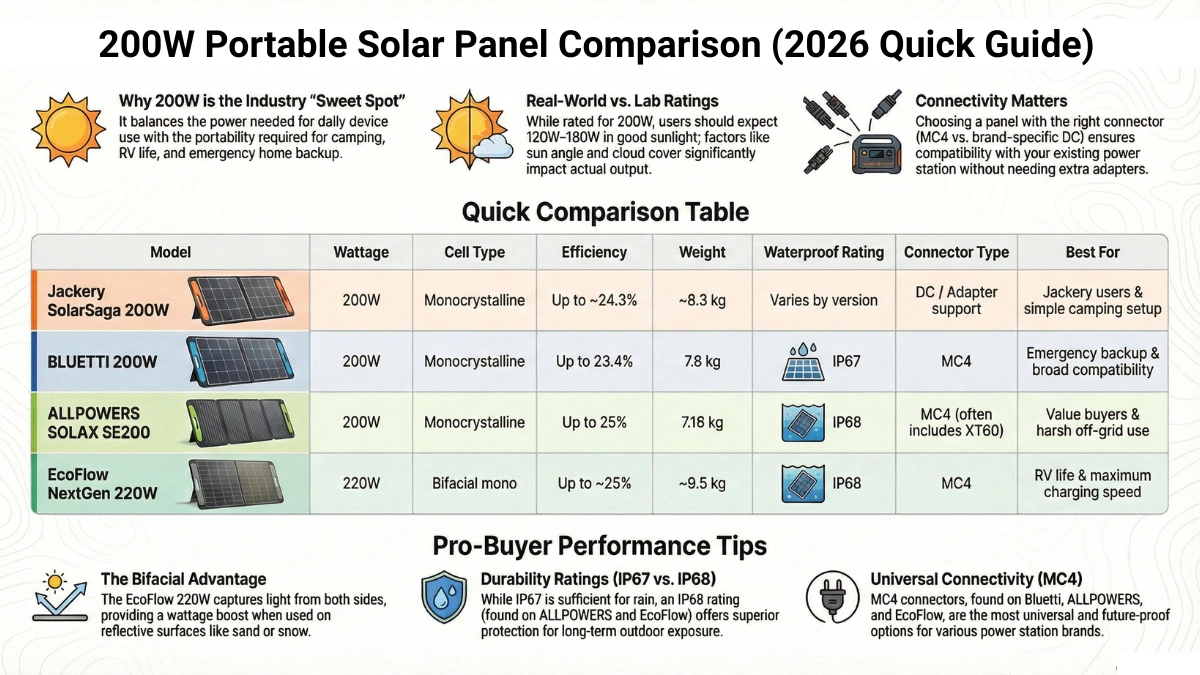
This table is the fastest way to compare what you’re actually getting.
| Brand / Model | Wattage | Cell Type | Efficiency % | Voltage (Voc) | Weight | Foldability | Waterproof Rating | Connector Type | Warranty | Best For |
|---|---|---|---|---|---|---|---|---|---|---|
| Jackery SolarSaga 200W | 200W | Monocrystalline (TOPCon) | Up to ~24–25% | ~23–25V (varies by version) | ≈6.4–8 kg | 4-panel folding briefcase | IP68 | DC + USB-A/USB-C (Jackery adapters) | 3+2 years at the official site | Camping, RV, plug-and-play setups |
| BLUETTI 200W Portable (SP200L) | 200W | Monocrystalline | Up to 23.4% | 24.62V | 7.8 kg | Foldable soft-case | IP67 | MC4 | 1-year Hassle Free | Home backup, Bluetti RV systems |
| ALLPOWERS 200W SE200 | 200W | Monocrystalline | 23–25% | ~24–26V (check manual for your region) | 7.16 kg | Slim laminated foldable with a stand | IP68 | MC4 (often with XT60 cable) | Commonly 2 years (verify on product page) | Value builds, mixed-brand generators |
| EcoFlow NextGen 220W Bifacial | 220W front / up to 175W rear | TOPCon monocrystalline | 25% | 21.5V | 7 kg | Foldable tempered glass with case stand | IP68 | MC4 to XT60 cable included | (US) 12 months (check latest terms) | High-output EcoFlow and off-grid use |
Tip: On mobile, swipe sideways to view the full table.
Compatibility Tip: Before buying, confirm your power station supports the panel’s Voc voltage range and connector type (MC4 / XT60 / DC). Using the wrong voltage range can reduce charging speed or prevent charging entirely.
Quick Spec Translator (What These Numbers Actually Mean)
If you’re comparing 200W portable solar panels, here’s what the key specs really mean in real-world use:
- IP67 / IP68 rating: Better protection during rain, travel storage, and emergency backup use.
- Efficiency (23%–25%): Higher efficiency usually means better charging in the morning and evening, as well as in hazy weather.
- MC4 connectors: The most universal connector type, making it easier to use with different power stations.
- Bifacial design (EcoFlow): Can boost charging speed by capturing reflected sunlight from the ground.
- Adjustable stand: Helps you angle the panel correctly, which can increase output noticeably compared to laying it flat.
- Weight: Lighter panels are easier to move and reposition during the day, which often improves charging results.
If you want the simplest rule: choose the panel that matches your power station connectors, has good waterproof protection, and is easy enough to carry that you’ll actually use it.
What You Can Run With a 200W Portable Solar Panel
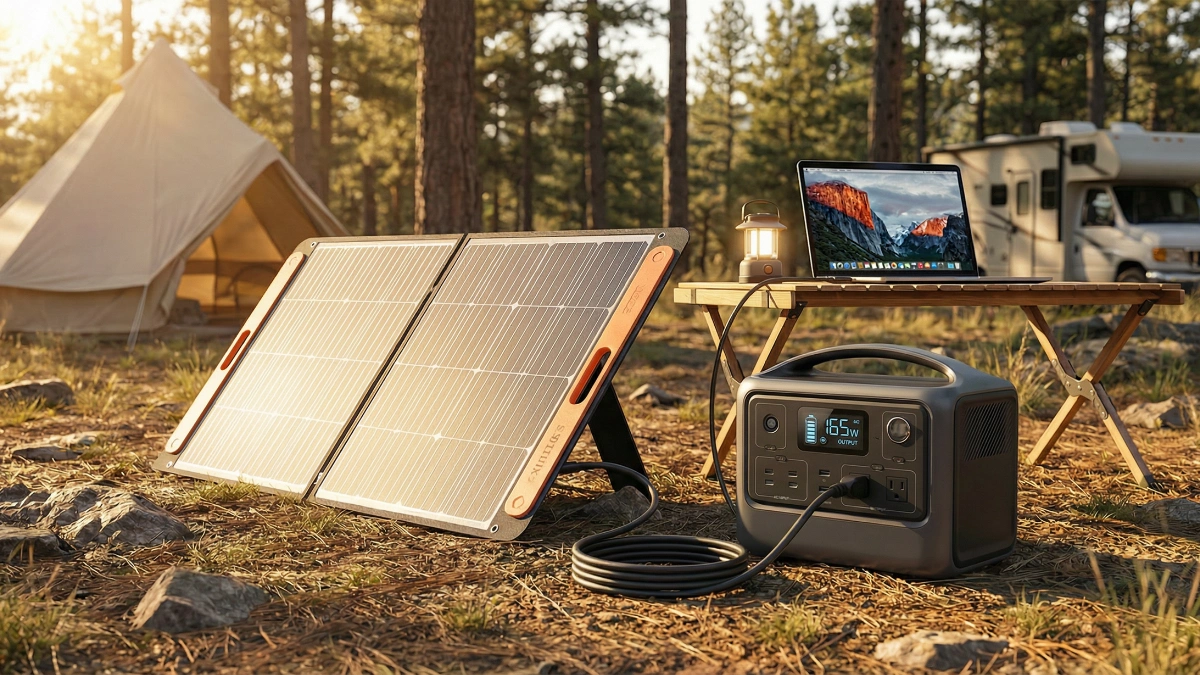
A portable solar panel doesn’t power appliances directly, as a wall outlet does. It charges a power station, and the power station runs your devices. That’s how most portable solar setups work.
With that in mind, a 200W panel is enough for most everyday essentials.
Typical Devices You Can Support (With a Power Station)
| Device | Typical Power Use | Can a 200W Solar Support It? |
|---|---|---|
| Smartphone charging | 5–15W | Yes |
| Laptop charging | 45–100W | Yes |
| WiFi router | 10–20W | Yes |
| LED lights | 5–30W | Yes |
| CPAP machine | 30–60W | Yes |
| Mini fridge (via power station) | 60–120W | Depends on battery size |
| Portable fan | 20–50W | Yes |
| Drone/camera charging | 30–100W | Yes |
If you plan to run heavy appliances daily, you’ll need at least 400W. For camping comfort and emergency preparedness, 200W portable solar panels are among the most practical options.
If you’re planning to power larger appliances or want faster charging, you’ll also want to see my guide to the best 2000Wh solar generators for camping and emergency backup.
200W vs 100W vs 400W Solar Panel: Which Solar Panel Size Should You Buy?
If you’re not sure whether 200W is the right size, this comparison makes it easy to decide.
100W Solar Panels
- Lightweight and easy to carry
- Fine for phones, tablets, and small batteries
- Slow charging for large power stations
Best for casual campers and light backup setups.
200W Solar Panels (The Sweet Spot)
- Strong enough to recharge most power stations daily
- Still portable enough for camping and RV travel
- Good balance of price and performance
Best for camping, RV life, emergency backup, and off-grid weekends.
400W or Higher Solar Setup
- Much faster charging
- Better for fridge-heavy setups and daily appliance use
- Higher cost and less portable
Best for full-time van life, off-grid cabins, and serious backup systems.
If you want one panel that won’t feel underpowered, a 200W portable solar panel is usually the smartest starting point.
Top 4 Product Reviews (Best 200W-220W Portable Solar Panel Options)
These are four of the strongest choices in the 200W category in 2026. Each one has a slightly different advantage depending on how you plan to use it.
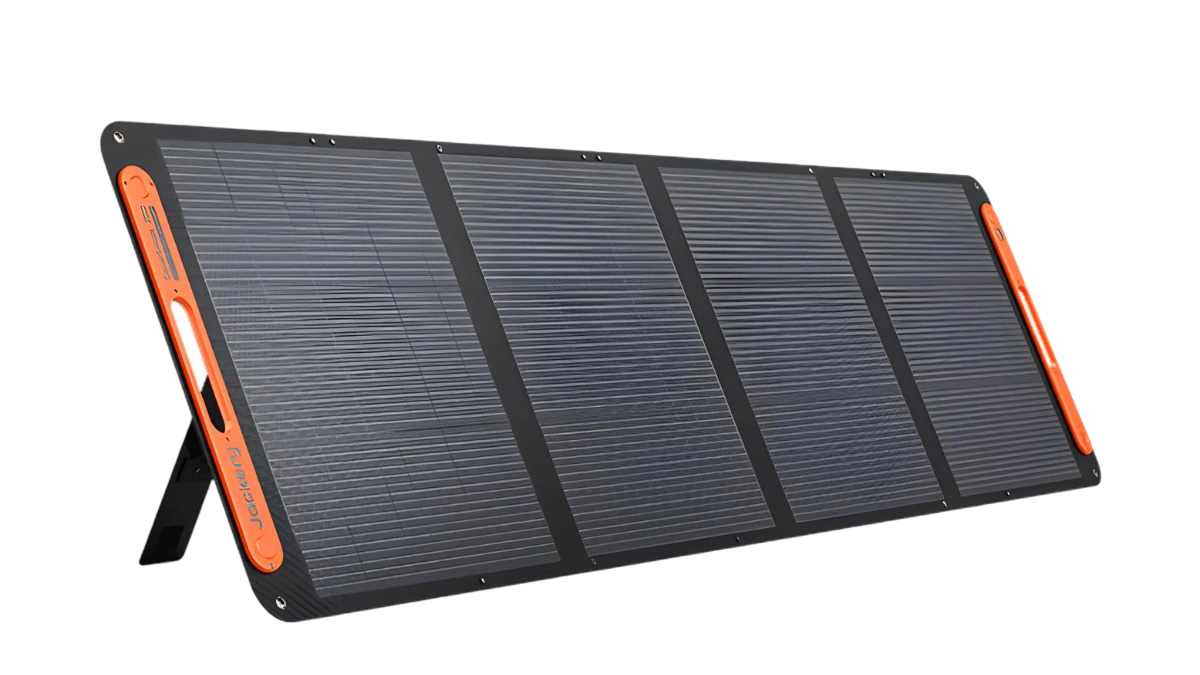
Jackery SolarSaga 200W Portable Solar Panel
Quick Take
Jackery SolarSaga 200W is one of the easiest portable solar panels to own. It’s simple, reliable, and designed to work smoothly with Jackery power stations.
Key Highlights
- 200W rated output
- Monocrystalline solar cells
- Foldable suitcase-style design
- Built-in kickstands for better sun angle
- Strong compatibility with Jackery solar generators
- Durable outer surface for travel use
- Trusted brand ecosystem
Pros
- Setup is quick and beginner-friendly
- Kickstands help increase output in the morning and afternoon sun
- Reliable performance in clear sunlight
- Works smoothly with Jackery power stations
- Strong reputation for long-term ownership
Cons
- Usually more expensive than similar 200W panels
- Weight is noticeable if you move it daily
- Less universal without adapters if you change power station brands
Real-World Performance
In open sunlight, Jackery’s panel can produce around 150W–185W in strong conditions. On cooler sunny days with a good angle, it can climb higher.
On cloudy days, output usually falls between 70W and 120W, depending on cloud thickness. That’s normal for this class.
Sun angle matters a lot. A correctly angled panel can easily outperform a flat panel, even if both are rated at 200W.
It pairs exceptionally well with Jackery Explorer 1000 v2, Explorer 1500 Pro, Explorer 2000 Plus, and similar models.
Best for
- Campers who want a simple plug-and-play setup
- Jackery Explorer owners who want perfect compatibility
- Weekend RV travelers who don’t want to deal with adapters
- Emergency backup buyers who value trusted brand reliability
Who Should Avoid It?
- Buyers focused only on the low price
- People who want universal MC4 output without adapters
- Ultralight travelers who prioritize portability above all
Check Today’s Price on the Jackery official site.
BLUETTI 200W Portable Solar Panel
Quick Take
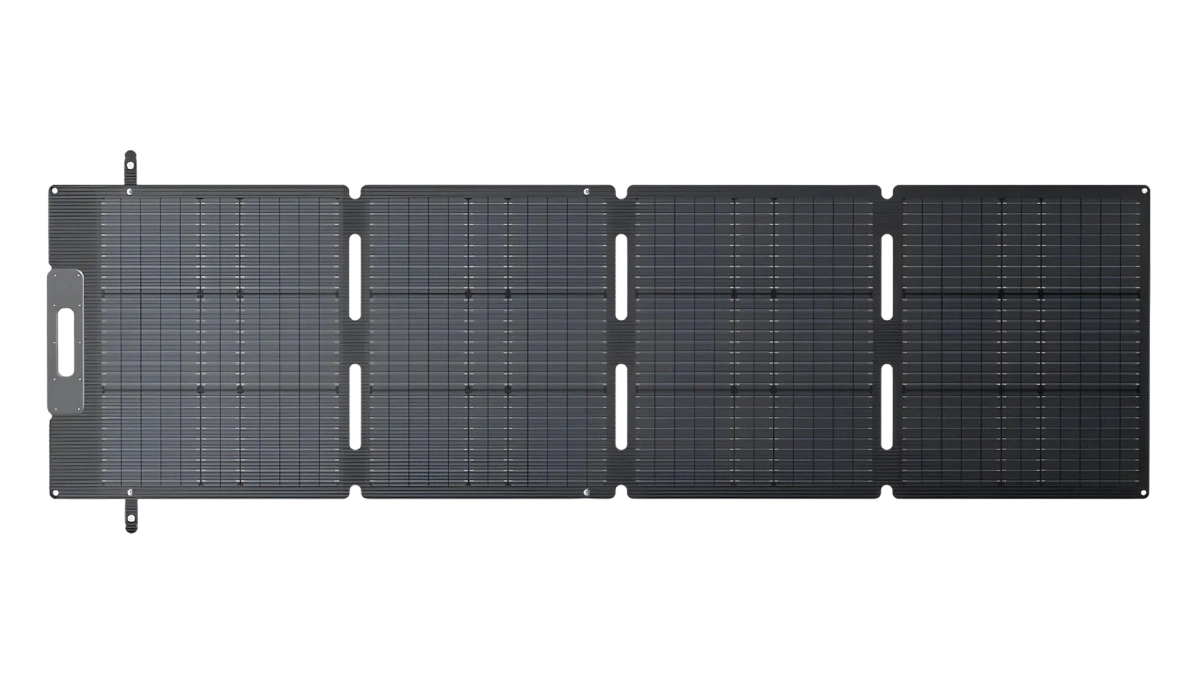
BLUETTI’s 200W panel is a strong all-rounder. It’s efficient, durable, and uses MC4 connectors, which makes it more flexible across different power station brands.
Key Highlights
- 200W rated power
- Up to 23.4% conversion efficiency
- VOC: 24.62V
- Foldable suitcase design
- IP67 waterproof rating
- MC4 connector output
- Compatible with many solar generators
Pros
- MC4 connectors make it flexible and future-proof
- Good balance of performance and portability
- Reliable for emergency backup storage
- Easy to deploy quickly during outages
- Works very well with Bluetti systems
Cons
- IP67 is good, but not as strong as IP68 panels
- Requires proper angling for best results
- Not the cheapest option in this category
Real-World Performance
BLUETTI performs best when angled correctly. In strong sunlight, output often ranges from 150W to 180W.
In normal daylight, you can expect around 110W–150W. In heavy cloud cover, it may dip below 100W. That’s typical for most 200W portable solar panels.
It pairs exceptionally well with Bluetti AC180, AC200L, Elite 200 V2, and similar models.
Best for
- Home emergency backup users needing MC4 compatibility
- Buyers using mid-size power stations (1000Wh–2000Wh range)
- People who want flexibility across different solar generator brands
- RV travelers who want stable daily charging without ecosystem lock-in
Who Should Avoid It?
- Buyers looking for the lowest cost panel
- People who need IP68 waterproofing for harsh conditions
- Backpackers or ultralight campers who need compact gear under 5kg
Check Today’s Price on the BLUETTI official site.
ALLPOWERS 200W Portable Solar Panel (SOLAX SE200)
Quick Take
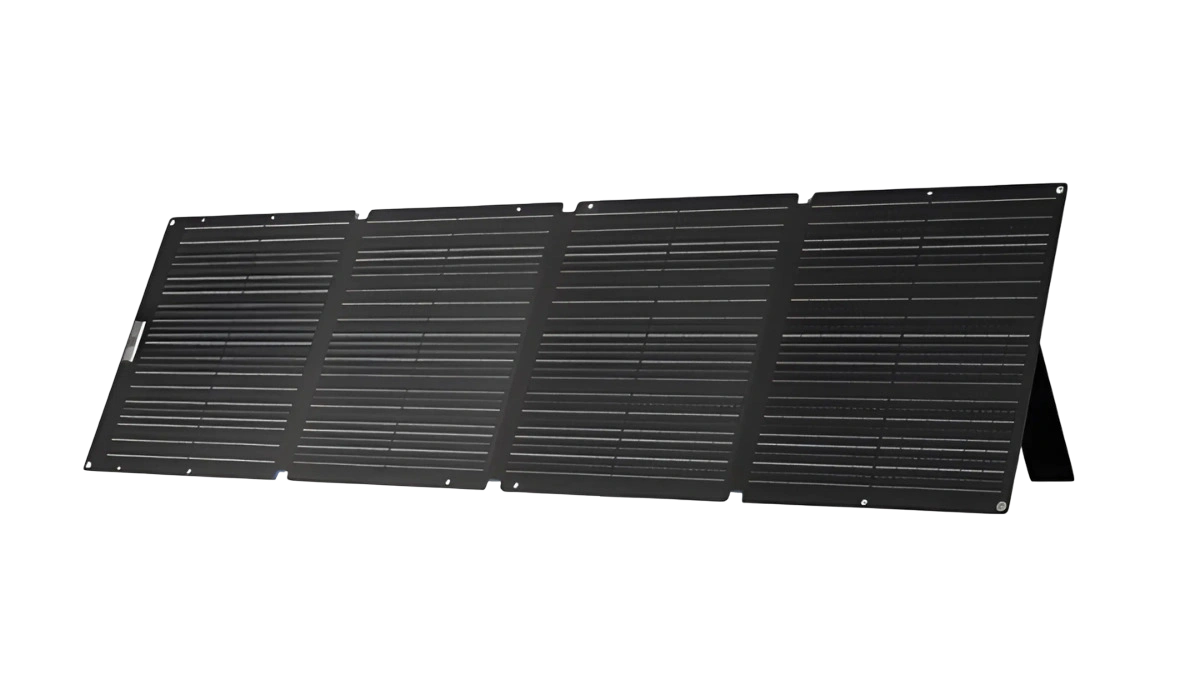
ALLPOWERS SOLAX SE200 is one of the best value panels in the 200W category. It offers high efficiency, IP68 waterproofing, and a functional, adjustable stand that improves real-world performance.
Key Highlights
- 200W rated output
- Up to 25% efficiency
- IP68 waterproof rating
- Adjustable stand (30°–60°)
- ETFE-coated surface
- Foldable suitcase design
- MC4 connectors (often includes XT60 cable)
Pros
- Excellent value compared to premium competitors
- An IP68 rating is great for outdoor and emergency use
- Stand angles improve output throughout the day
- The ETFE surface resists wear and scratches
- Lightweight compared to many 200W competitors
Cons
- Brand reputation is not as strong as EcoFlow or Jackery
- Hinges require careful folding over time
- Support experience depends on the region
Real-World Performance
In intense sun, this panel can realistically produce around 160W–190W when positioned correctly. In mixed sunlight, 120W–160W is standard.
The adjustable stand is a significant advantage. It helps you maintain better sun alignment, especially in the early morning or late afternoon.
It pairs exceptionally well with ALLPOWERS R600, R1500, R2500, and similar models.
Best for
- Budget-smart buyers who still want premium-level specs
- Off-grid cabin users who need durability and IP68 protection
- Campers who want lightweight portability without sacrificing output
- Users who want a strong value plus a useful adjustable stand
Who Should Avoid It?
- People who only trust premium brand ecosystems
- Buyers who want the most premium hinge design
- Users who prefer an ultra-compact fold size
Check Today’s Price on the ALLPOWERS official site.
EcoFlow NextGen 220W Bifacial Portable Solar Panel
Quick Take
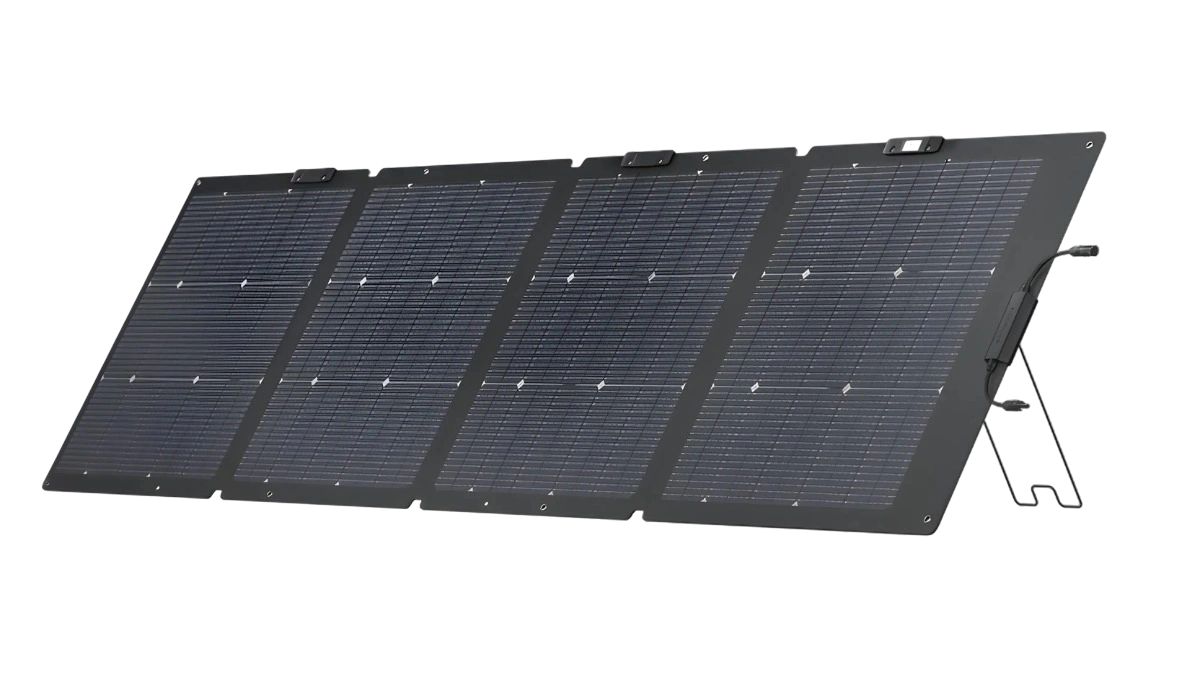
EcoFlow’s NextGen 220W isn’t technically a 200W panel—it’s a bit more—but it absolutely belongs in any “best portable solar panel in this wattage class” shortlist. It is the highest-wattage model in this comparison and often delivers stronger real-world charging performance under ideal conditions.
Key Highlights
- Rated 220W (highest in this comparison)
- Bifacial design captures light from both sides
- High efficiency (up to 25% class)
- IP68 waterproof rating
- Foldable suitcase-style design
- MC4 connector output
- Excellent compatibility with EcoFlow power stations
Pros
- Highest output potential among these options
- Bifacial design can boost wattage in bright conditions
- IP68 rating offers strong outdoor protection
- Premium build quality for long-term ownership
- Excellent choice for RV and travel-heavy users
Cons
- More expensive than standard 200W panels
- Bulkier and less travel-friendly than lighter 200W panels
- Bifacial advantage depends on reflective surfaces
Real-World Performance
EcoFlow is the closest option here to accurate high-output charging. On a clear sunny day, output often reaches 180W–210W and can climb higher depending on conditions.
On bright surfaces like sand or snow, the bifacial design can provide a noticeable boost compared to a standard panel.
In cloudy weather, output still drops, but EcoFlow often remains competitive at around 90W–140W, depending on cloud cover.
It pairs exceptionally well with EcoFlow DELTA 2, DELTA 2 Max, DELTA Pro, RIVER 2 Pro, and similar models.
Best for
- RV and van-life users needing the fastest recharge times
- Users with 1000Wh–3000Wh power stations
- Campers who travel in open sunlight environments (desert, beach, open fields)
- Buyers who want premium build quality for long-term ownership
Who Should Avoid It?
- Budget buyers
- Backpack campers
- Users who camp mostly in shaded forests
Check Today’s Price on the EcoFlow official site.
How to Choose the Best 200W Portable Solar Panel (Buyer’s Checklist)
Once you know what matters, choosing the right panel becomes much easier.
Efficiency (What It Means in Real Use)
Efficiency affects how much power you get in less-than-perfect sunlight. A higher-efficiency panel generally performs better in the early morning, late afternoon, winter sun, and light cloud cover.
Most good panels today fall in the 22%–25% range. That difference adds up over a full day of charging.
Waterproof Rating (IP67 vs IP68)
If you plan to use solar outdoors, waterproof rating matters.
- IP67 is fine for rain and dust
- IP68 is better for harsher outdoor exposure
If you camp often or store your panel for emergency use, IP68 is a safer long-term choice.
Foldability and Portability
A 200W panel is portable, but not lightweight. The best ones fold neatly and are easy to carry.
If you’ll move it frequently, weight matters more than you think. A panel that’s too heavy becomes annoying quickly, especially when you set it up multiple times a day.
Connector Compatibility (MC4, XT60, DC)
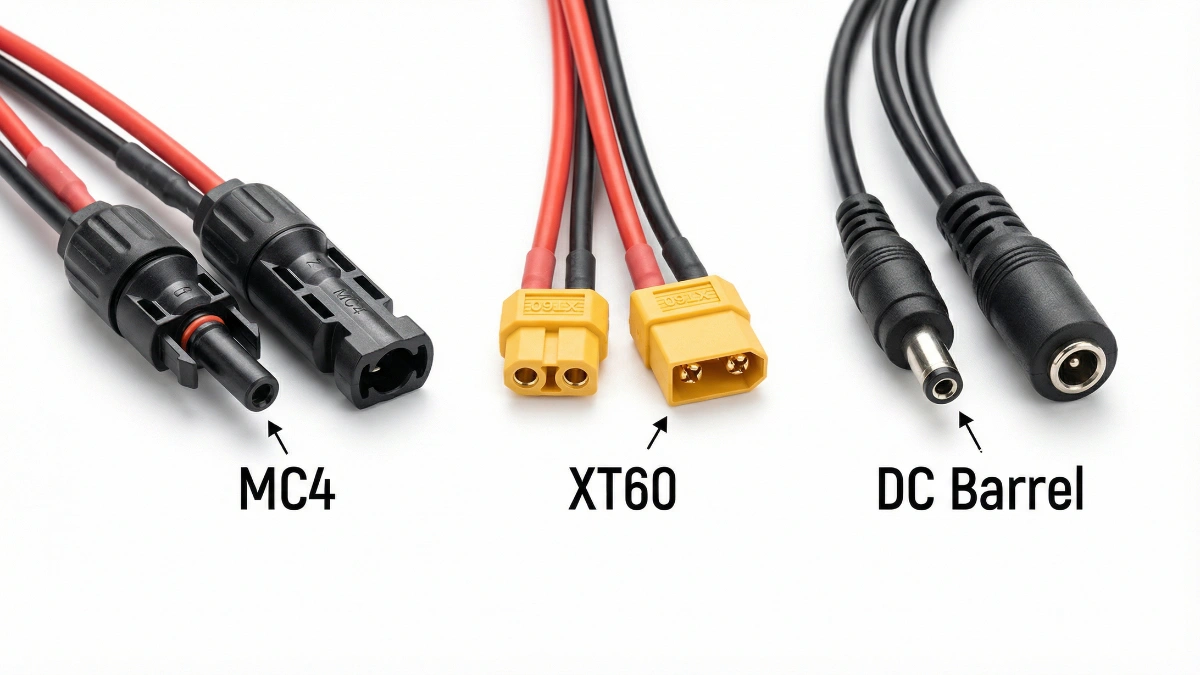
Connector compatibility is one of the biggest deal-breakers.
- MC4 is the most universal connector type
- XT60 is common for some solar generators
- DC connectors are often used in brand ecosystems
Before buying, confirm your power station’s input connector type and voltage range.
If you’re expanding into a home solar setup later, don’t miss my guide on common solar inverter installation mistakes.
Solar Generator Compatibility
If you already own a power station, buying a panel from the same brand often reduces headaches. It usually means fewer adapters and smoother charging.
Jackery works best with Jackery systems, EcoFlow works best with EcoFlow systems, and so on. That said, MC4 panels, such as those from BLUETTI and ALLPOWERS, can be used with many brands.
Real-World Output Expectations
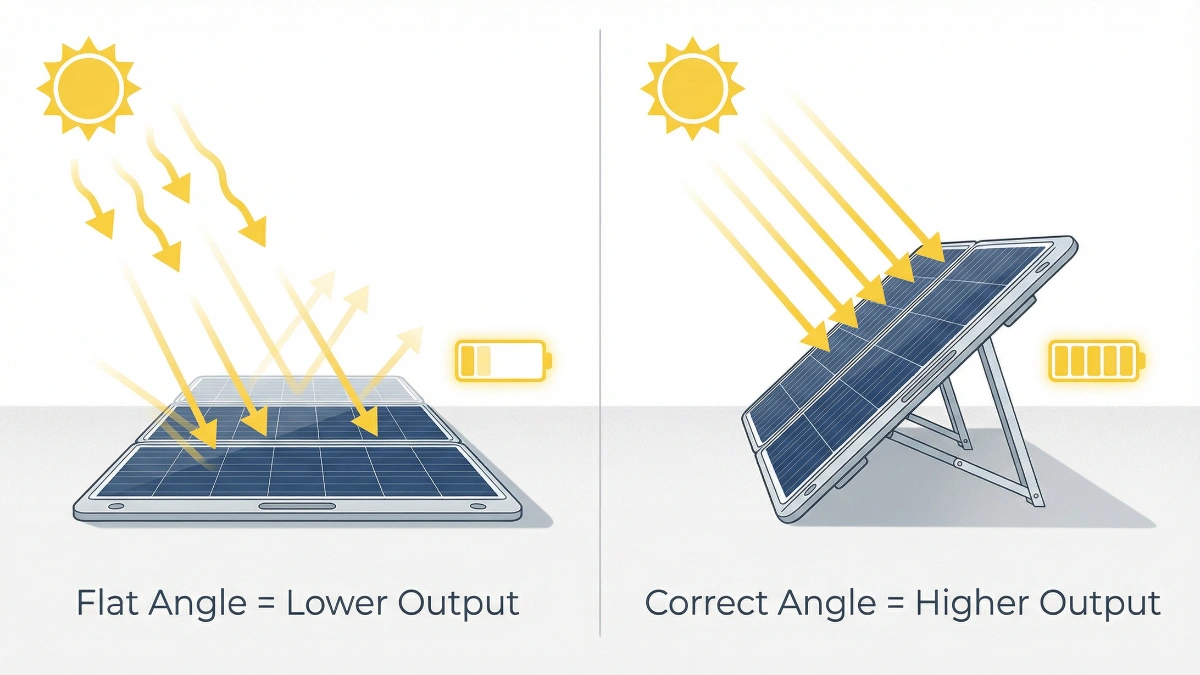
The 200W portable solar panel will not continuously output 200W.
In real outdoor use, expect:
- 120W–180W in good sunlight
- 60W–120W on cloudy days
If you regularly see an output of 170 W+, your setup and sunlight conditions are excellent.
If you want to estimate realistic solar output for your location and season, you can also use the free NREL PVWatts Calculator, one of the most trusted tools for solar production estimates.
If you’re building a full travel setup, I also recommend reading my complete guide on portable solar power for camping and travel.
When 200W Is Enough vs When You Need 400W+
A 200W panel is usually enough for:
- charging 500Wh–2000Wh power stations
- running lights, laptops, phones, and routers
- powering CPAP machines
- weekend off-grid trips
You should consider 400W or more if:
- You run a refrigerator daily
- You travel full-time in an RV
- You need faster charging in limited sunlight
- You rely on solar as your primary power source
If you’re comparing solar costs long-term, you can also use my solar ROI calculator for India and the US.
How We Selected These Panels
These models were selected based on what matters most to buyers:
- Real charging performance potential
- Portability and folding design
- Durability and waterproof rating
- Brand reputation and warranty reliability
- Connector compatibility
- Practical buyer feedback and long-term use reports
These models were selected because they are widely available, well-reviewed, and perform reliably across common use cases.
Common Mistakes Buyers Make When Buying a 200W Solar Panel
Most people don’t buy the wrong panel because they’re careless. They buy wrong because they don’t know what to check.
Here are the biggest mistakes to avoid:
Expecting a constant 200W output
That number is a lab rating. Real-world output constantly changes with weather and sun angle.
Ignoring voltage requirements
A panel that doesn’t match your power station’s input range can charge slowly or not charge at all.
Buying the wrong connector type
MC4 is the safest universal option. Brand-specific connectors often require adapters.
Not checking waterproof rating.
If you’re using solar outdoors or storing it for emergencies, IP rating matters.
Buying a panel that’s too heavy
If carrying it feels like a chore, you’ll use it less. That defeats the purpose of buying portable solar.
If you’re serious about emergency preparedness, you may also want to check my recommended solar power survival kit essentials.
My Recommendation If You’re Buying Today
If you’re buying right now, here’s the easiest way to choose.
- For maximum performance and fast charging: EcoFlow NextGen 220W Bifacial
- For best value and durability: ALLPOWERS SOLAX SE200 200W
- For Jackery power station owners: Jackery SolarSaga 200W
- For universal compatibility and emergency backup: BLUETTI 200W
If you’re preparing for storm season or planning a long trip, don’t wait until the last minute. Portable solar panels often sell out or jump in price when demand rises.
FAQ
1) Is a 200W portable solar panel enough for a power station?
Yes. A 200W portable solar panel is enough to recharge most 500Wh to 2000Wh power stations for camping, RV travel, and emergency backup.
2) How long does a 200W solar panel take to charge a 1000Wh battery?
In strong sunlight, it can take 6 to 8 hours. In real-world conditions, 8 to 12 hours is more realistic.
3) Can a 200W portable solar panel run a refrigerator?
Not directly. It can recharge a power station that powers a refrigerator, depending on the battery size and the fridge’s watt draw.
4) Do 200W portable solar panels work on cloudy days?
Yes, but output drops significantly. Many panels produce 60-120W, depending on cloud cover.
5) Which is the Best 200W portable solar panel for camping?
Jackery SolarSaga 200W is a strong camping choice for simplicity. ALLPOWERS is also excellent if you want a better value.
6) Is EcoFlow’s 220W bifacial panel better than a standard 200W panel?
In many cases, yes. The bifacial design can increase output when sunlight reflects off sand, snow, or bright ground surfaces.
7) What connector type is best for portable solar panels?
MC4 is the most universal connector type and works with many solar generators. DC and XT60 are also standard, depending on the power station brand.
8) Can I use these solar panels with any power station?
Many are compatible, but you must confirm your power station’s voltage input range and connector type before buying.
9) Is one 200W panel better than two 100W panels?
One 200W panel is easier to set up and transport. Two 100W panels offer flexibility and may fit better into storage spaces.
10) Is it worth buying a 200W portable solar panel for emergency preparedness?
Yes. A portable solar panel is one of the most useful emergency tools because it can recharge your power station repeatedly during extended outages.
11) What is the average real output of a 200W portable solar panel?
In real outdoor conditions, most 200W portable solar panels produce around 120W to 180W, depending on sun angle, temperature, cloud cover, and shading. Peak output near 200W is possible, but usually only in ideal midday sunlight.
12) Do portable solar panels work through glass?
Portable solar panels can work through glass, but performance drops heavily. Standard window glass reduces sunlight intensity, cutting output by 30%–60% or more. For best results, always place your panel outdoors in direct sunlight.
Final Verdict
If you’re buying a 200W portable solar panel in 2026, you’re choosing one of the most practical power upgrades available. This wattage class is powerful enough for real backup use, but still portable enough for camping and RV travel.
Here’s the simplest way to decide:
| If You Want… | Choose | Why It’s the Best Fit |
|---|---|---|
| Fastest charging and premium performance | EcoFlow NextGen 220W Bifacial | Bifacial design + higher watt rating delivers the best real-world output. |
| Best durability per price | ALLPOWERS SOLAX SE200 200W | IP68 rating, ETFE surface, and strong efficiency at a value price. |
| Plug-and-play ecosystem simplicity | Jackery SolarSaga 200W | Designed to work smoothly with Jackery power stations without adapter hassle. |
| Best universal compatibility for emergencies | BLUETTI 200W Portable Solar Panel | MC4 connectors make it flexible with many power stations and setups. |
If your goal is camping comfort, travel convenience, and real emergency preparedness, any of these four panels is a wise investment. The key is choosing the one that fits your power station and your lifestyle.
Before peak travel season or the next storm cycle hits, it’s worth checking prices and availability now. These panels often go out of stock when demand rises.
Check the latest deal on the official brand store and secure your portable solar setup today.
About the Author

SolarGizmoGuide is an independent solar research and publishing platform focused on practical, real-world solar solutions for urban homes and apartments. Our editorial team analyzes solar gadgets, mounting systems, backup power systems, and portable solar technology to help readers make informed investment decisions.
All content is based on independent research, manufacturer technical documentation, and publicly available performance data. Articles are reviewed and updated periodically to reflect current installation standards, safety considerations, and evolving solar technology.